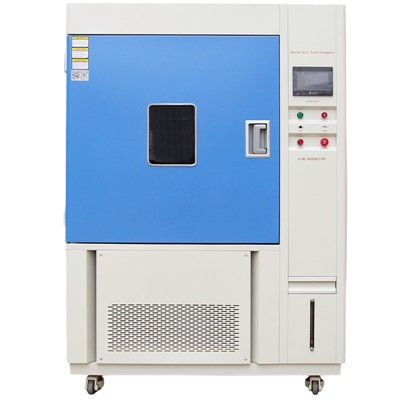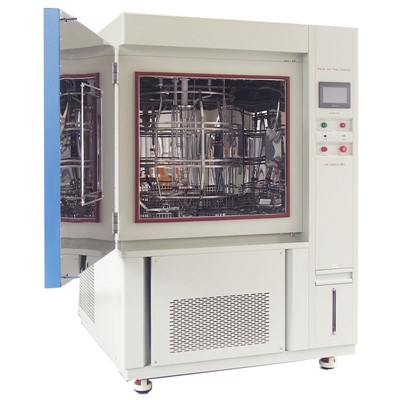



Hey there! As a supplier of Xenon Weatherometers, I often get asked, "Can the Xenon Weatherometer be used for testing paints and coatings?" Well, the short answer is a resounding yes! In this blog, I'll dive deep into why Xenon Weatherometers are an excellent choice for testing paints and coatings, how they work, and the benefits they bring to the table.
What is a Xenon Weatherometer?
Before we get into the nitty - gritty of paint and coating testing, let's quickly go over what a Xenon Weatherometer is. A Xenon Weatherometer is a piece of equipment that simulates natural weathering conditions in a controlled environment. It uses a xenon arc lamp to replicate sunlight, along with other features to mimic rain, humidity, and temperature variations.
There are different types of Xenon Weatherometers available, such as the Xenon Arc Lamp Aging Test Chamber and the Xenon Weathering Test Chamber. These chambers are part of the Accelerated Weathering Test Equipment category, which means they can speed up the weathering process, allowing you to get test results in a much shorter time compared to real - world exposure.
Why Test Paints and Coatings?
Paints and coatings are used in a wide range of applications, from automotive finishes to building exteriors. They need to withstand various environmental factors over time, such as sunlight, rain, snow, and temperature changes. If a paint or coating fails prematurely, it can lead to costly repairs, safety issues, and a negative impact on the appearance of the product.
Testing paints and coatings helps manufacturers ensure that their products meet the required standards and can perform well in different environments. It allows them to identify potential weaknesses in the formulation and make necessary improvements before the product hits the market.
How Does a Xenon Weatherometer Test Paints and Coatings?
The Xenon Weatherometer works by exposing paint and coating samples to a combination of light, heat, humidity, and moisture. The xenon arc lamp in the chamber emits a spectrum of light that closely resembles natural sunlight, including ultraviolet (UV), visible, and infrared (IR) radiation. This light can cause degradation of the paint or coating, such as color fading, chalking, cracking, and loss of adhesion.
Here's a step - by - step breakdown of the testing process:
- Sample Preparation: First, a small sample of the paint or coating is applied to a test panel. The panel is usually made of a material that is representative of the intended application, such as metal, plastic, or wood.
- Chamber Setup: The test panels are placed inside the Xenon Weatherometer, and the chamber is set to the desired test conditions. These conditions can be adjusted to simulate different environments, such as indoor, outdoor, tropical, or desert climates.
- Exposure: The test panels are then exposed to the simulated weathering conditions for a specified period of time. The length of the exposure depends on the type of paint or coating being tested and the desired level of degradation.
- Evaluation: After the exposure period, the test panels are removed from the chamber and evaluated for any signs of degradation. This can be done visually, by measuring color change, gloss loss, or adhesion strength, or by using more advanced analytical techniques.
Benefits of Using a Xenon Weatherometer for Paint and Coating Testing
There are several benefits to using a Xenon Weatherometer for testing paints and coatings:


- Accelerated Testing: As mentioned earlier, the Xenon Weatherometer can speed up the weathering process, allowing you to get test results in a matter of weeks or months instead of years. This can significantly reduce the time and cost associated with product development and quality control.
- Controlled Environment: The test chamber provides a controlled environment, which means you can accurately reproduce the same test conditions every time. This ensures the reliability and repeatability of the test results.
- Realistic Simulation: The xenon arc lamp emits a spectrum of light that closely resembles natural sunlight, and the chamber can also simulate other environmental factors such as humidity and temperature changes. This makes the test results more representative of real - world conditions.
- Versatility: Xenon Weatherometers can be used to test a wide range of paints and coatings, including automotive paints, architectural coatings, industrial coatings, and powder coatings.
Limitations of Xenon Weatherometer Testing
While Xenon Weatherometers are a powerful tool for paint and coating testing, they do have some limitations. For example, they may not be able to fully replicate all the complex environmental factors that a paint or coating may encounter in the real world. Additionally, the accelerated testing process may not always accurately predict the long - term performance of a product.
However, these limitations can be mitigated by combining Xenon Weatherometer testing with other types of testing, such as real - world exposure testing and laboratory analysis.
Conclusion
In conclusion, the Xenon Weatherometer is an excellent tool for testing paints and coatings. It offers accelerated testing, a controlled environment, realistic simulation, and versatility, making it a valuable asset for paint and coating manufacturers. If you're in the business of developing or quality - controlling paints and coatings, investing in a Xenon Weatherometer can help you ensure the performance and durability of your products.
If you're interested in learning more about our Xenon Weatherometers or are considering purchasing one for your testing needs, don't hesitate to reach out. We're here to help you find the right solution for your specific requirements. Whether you're a small - scale paint manufacturer or a large industrial company, our team can provide you with the support and guidance you need to make an informed decision.
Let's work together to ensure the quality and performance of your paints and coatings!
References
- ASTM International. (20XX). Standard practices for operating xenon arc light apparatus for exposure of non - metallic materials.
- ISO. (20XX). Plastics - Methods of exposure to laboratory light sources - Part 2: Xenon - arc sources.