



What is the Temperature Uniformity in a Mini Temperature Chamber?
In the world of scientific research, product testing, and quality control, maintaining precise environmental conditions is crucial. One of the key tools in achieving this is the Mini Temperature Chamber. As a leading supplier of these chambers, we understand the importance of temperature uniformity and its impact on various applications.
Understanding Temperature Uniformity
Temperature uniformity refers to the degree to which the temperature is consistent throughout the interior of the Mini Temperature Chamber. In an ideal scenario, the temperature at every point within the chamber would be exactly the same. However, in reality, there are always slight variations due to factors such as air circulation, heat transfer, and the position of the heating and cooling elements.
The significance of temperature uniformity cannot be overstated. In many applications, even small temperature differences can have a significant impact on the results. For example, in pharmaceutical research, where the stability of drugs is being tested, a few degrees of temperature variation could lead to inaccurate results and potentially affect the safety and efficacy of the product. Similarly, in electronics manufacturing, temperature variations can cause components to expand or contract at different rates, leading to mechanical stress and potential failure.
Factors Affecting Temperature Uniformity
Several factors can influence the temperature uniformity in a Mini Temperature Chamber. One of the most important is the design of the chamber itself. A well-designed chamber will have a proper air circulation system that ensures even distribution of heat and cold throughout the interior. This can be achieved through the use of fans, ducts, and baffles to direct the airflow in a controlled manner.
The location and type of heating and cooling elements also play a crucial role. Heating elements should be evenly distributed to prevent hot spots, while cooling elements should be able to remove heat efficiently without creating cold spots. Additionally, the insulation of the chamber is important to minimize heat transfer to the outside environment and maintain a stable internal temperature.
The size and shape of the chamber can also affect temperature uniformity. Larger chambers may require more powerful heating and cooling systems to maintain consistent temperatures, while irregularly shaped chambers may have areas where the airflow is restricted, leading to temperature variations.
Measuring Temperature Uniformity
To ensure that a Mini Temperature Chamber meets the required standards of temperature uniformity, it is necessary to measure the temperature at multiple points within the chamber. This can be done using temperature sensors placed at different locations, and the data can be recorded and analyzed to determine the temperature variation.
There are several methods for measuring temperature uniformity, including the use of thermocouples, resistance temperature detectors (RTDs), and infrared thermometers. Each method has its own advantages and disadvantages, and the choice of method will depend on the specific requirements of the application.

Once the temperature uniformity has been measured, it is important to compare the results to the specified standards. Most Mini Temperature Chambers are designed to meet certain industry standards, such as those set by the International Electrotechnical Commission (IEC) or the American Society for Testing and Materials (ASTM). If the measured temperature uniformity does not meet the required standards, adjustments may need to be made to the chamber, such as adjusting the airflow or the settings of the heating and cooling elements.
Importance of Temperature Uniformity in Different Applications
The importance of temperature uniformity varies depending on the specific application. In some cases, such as in the testing of electronic components, a high degree of temperature uniformity is essential to ensure accurate and reliable results. In other cases, such as in the storage of food or pharmaceuticals, a slightly lower degree of temperature uniformity may be acceptable, as long as the temperature remains within a certain range.
In the field of materials science, temperature uniformity is crucial for the study of the properties of materials under different temperature conditions. For example, in the research of phase transitions in metals, a small temperature variation can affect the results and lead to inaccurate conclusions. Similarly, in the development of new materials, such as polymers and composites, temperature uniformity is important to ensure that the materials are processed under consistent conditions.
In the pharmaceutical industry, temperature uniformity is critical for the stability testing of drugs. Drugs are often stored and transported at specific temperatures, and any deviation from these temperatures can affect their quality and efficacy. Therefore, it is important to use Mini Temperature Chambers with high temperature uniformity to ensure that the drugs are tested under realistic conditions.
Our Mini Temperature Chamber Solutions
As a leading supplier of Mini Temperature Chambers, we offer a range of products that are designed to meet the diverse needs of our customers. Our chambers are equipped with advanced features to ensure high temperature uniformity, including efficient air circulation systems, precise temperature control, and high-quality insulation.
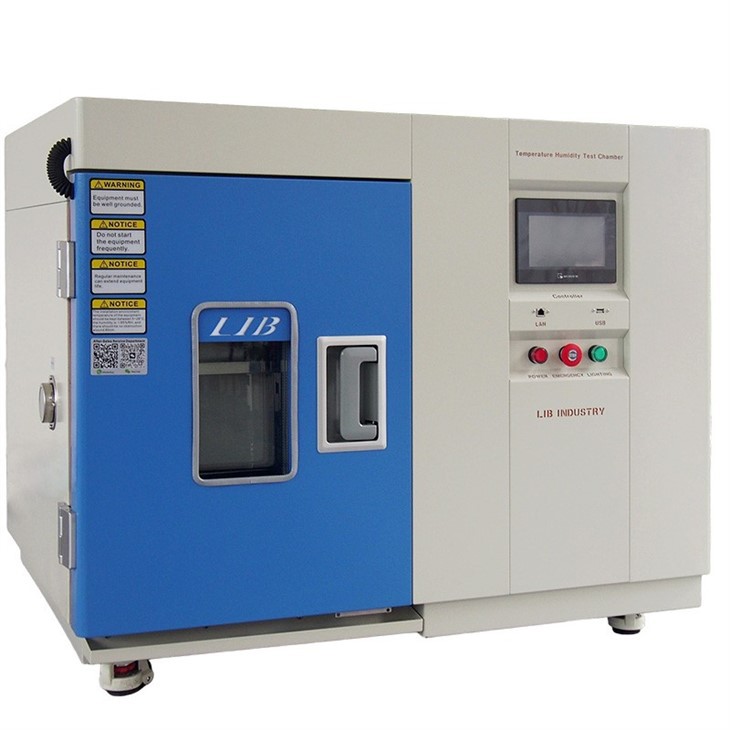
Our Mini Temperature Chamber is a compact and versatile solution that is suitable for a wide range of applications. It offers a temperature range of -40°C to 120°C and a temperature uniformity of ±0.5°C at 25°C. The chamber is equipped with a digital controller that allows for easy programming and monitoring of the temperature and other parameters.
In addition to our Mini Temperature Chamber, we also offer a Compact Constant Relative Humidity Environmental Chamber that is designed to maintain a constant relative humidity level in addition to temperature control. This chamber is ideal for applications where humidity is an important factor, such as in the testing of electronic components or the storage of pharmaceuticals.
We also have a Benchtop Temperature Controlled Chamber that is suitable for small-scale testing and research. This chamber offers a temperature range of -20°C to 80°C and a temperature uniformity of ±1°C at 25°C. It is a cost-effective solution for laboratories and research facilities with limited space.
Conclusion
Temperature uniformity is a critical factor in the performance of Mini Temperature Chambers. It ensures accurate and reliable results in various applications, from scientific research to product testing and quality control. As a leading supplier of Mini Temperature Chambers, we are committed to providing our customers with high-quality products that meet the highest standards of temperature uniformity.
If you are interested in learning more about our Mini Temperature Chambers or have any questions about temperature uniformity, please feel free to contact us. Our team of experts will be happy to assist you in finding the right solution for your specific needs.
References
- International Electrotechnical Commission (IEC). IEC 60068-2-1: Environmental testing - Part 2-1: Tests - Test A: Cold.
- American Society for Testing and Materials (ASTM). ASTM D4339-13: Standard Practice for Conditioning and Testing Flexible Barrier Materials.
- ISO 17025:2017: General requirements for the competence of testing and calibration laboratories.


