


Hey there! As a supplier of xenon chambers, I often get asked about all sorts of technical details. One question that comes up quite a bit is, "What is the vibration level inside a xenon chamber?" Well, let's dive right into it.
First off, let me give you a bit of background on xenon chambers. These bad boys, like our Xenon Arc Test Chamber, are used for all kinds of testing. They're great for simulating real - world weather conditions to see how materials hold up over time. You can use them to test paints, plastics, and all sorts of other materials in industries like automotive, aerospace, and construction.
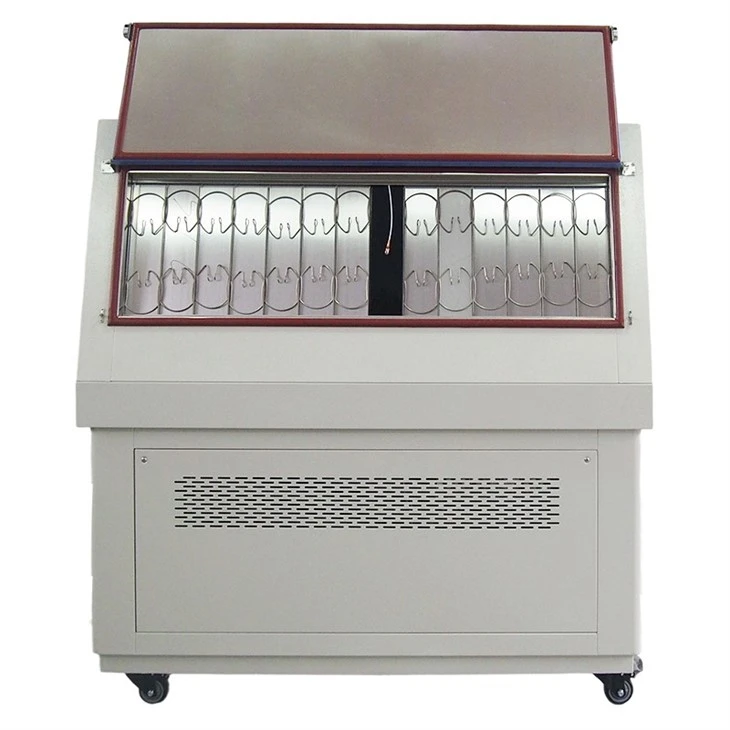

Now, vibration in a xenon chamber might not be the first thing that comes to mind when you think about these testing machines, but it's actually a pretty important factor. Vibration can affect the accuracy of your test results. If there's too much vibration, it could cause components inside the chamber to move around, which might mess with the way your samples are being exposed to the simulated environment.
So, what causes vibration in a xenon chamber? There are a few things. One of the main culprits is the fan system. The fans are there to circulate the air inside the chamber, making sure that the temperature and humidity are evenly distributed. But when they spin at high speeds, they can create some vibration. Another source could be the cooling system. Compressors and pumps in the cooling system can also generate vibrations as they work to keep the chamber at the right temperature.
The vibration level inside a xenon chamber is typically measured in terms of acceleration, usually in units of g (where 1 g is the acceleration due to gravity, approximately 9.81 m/s²). The acceptable vibration level can vary depending on the specific application and the type of materials being tested. For most standard applications, a vibration level of less than 0.1 g is considered acceptable. This low level of vibration ensures that the samples inside the chamber are stable and that the test results are reliable.
But how do we make sure that our Accelerated Weathering Test Equipment meets these vibration standards? Well, at our company, we take a few steps. First, we use high - quality components in our chambers. The fans and motors are carefully selected for their low - vibration operation. We also use vibration - damping materials in the construction of the chamber. These materials absorb some of the vibrations, reducing the amount that gets transferred to the samples.
Another important aspect is the installation of the chamber. If the chamber isn't installed properly, it can be more prone to vibration. We always recommend that our customers have the chamber installed by a professional. They'll make sure that the chamber is level and that it's sitting on a stable surface. This helps to minimize any external vibrations that could affect the chamber's performance.
Let's talk about how vibration can impact different types of tests. In a colorfastness test, for example, even a small amount of vibration could cause the sample to move slightly, which might lead to uneven exposure to the light source. This could result in inaccurate color measurement results. In a mechanical property test, vibration could cause stress on the sample, which might change its mechanical properties and give false readings.
When it comes to our Xenon Weathering Test Chamber, we've done a lot of testing to ensure that the vibration levels are within the acceptable range. We use advanced vibration - monitoring equipment to measure the vibration levels during the manufacturing process. This allows us to make any necessary adjustments before the chamber leaves our factory.
We also offer ongoing support to our customers. If they notice any issues with vibration in their chamber, we're always ready to help. We can send out a technician to check the chamber and make any repairs or adjustments as needed.
In conclusion, the vibration level inside a xenon chamber is an important factor that can affect the accuracy of your test results. By using high - quality components, vibration - damping materials, and proper installation techniques, we're able to keep the vibration levels in our chambers within the acceptable range.
If you're in the market for a xenon chamber for your testing needs, whether it's for research, quality control, or product development, we'd love to talk to you. We have a wide range of chambers to suit different applications and budgets. Contact us to start a conversation about how we can help you get the most accurate and reliable test results with our xenon chambers.
References
- ASTM International standards related to environmental testing equipment
- Technical literature on the design and operation of xenon chambers
- In - house research and development reports on vibration control in xenon chambers


