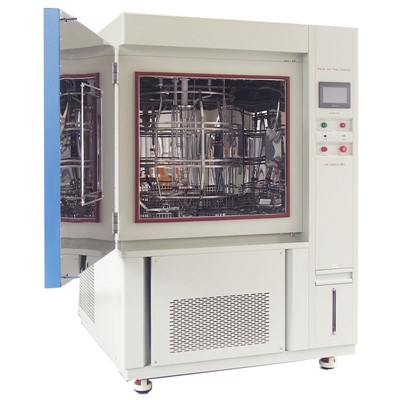


As a supplier of UV Weathering Test Chambers, I often encounter inquiries from customers regarding the versatility of our equipment. One common question is whether a UV weathering test chamber can be used for salt spray tests. In this blog post, I will delve into the technical aspects of both tests, explore the differences between UV weathering and salt spray testing, and provide insights on whether a UV weathering test chamber can serve the purpose of a salt spray test.
Understanding UV Weathering Tests
UV weathering tests are designed to simulate the long - term effects of sunlight, particularly ultraviolet radiation, on materials. The sun's UV rays can cause significant damage to various products, including plastics, paints, coatings, and textiles. These damages may manifest as color fading, loss of gloss, cracking, and embrittlement.
A UV Weather Resistance Test Chamber typically uses special UV lamps to emit a spectrum of UV light that closely mimics natural sunlight. The chamber can also control other environmental factors such as temperature and humidity to create a more realistic weathering environment. By exposing test specimens to this simulated sunlight for a specific period, manufacturers can predict how their products will perform outdoors over time.
Understanding Salt Spray Tests
Salt spray tests, on the other hand, are used to evaluate the corrosion resistance of materials, especially metals and metal coatings. In a salt spray test, test specimens are exposed to a fine mist of saltwater, usually a 5% sodium chloride solution. This salt - laden mist creates a highly corrosive environment that accelerates the corrosion process.


The purpose of salt spray tests is to determine how well a material can withstand the harsh conditions of coastal or industrial environments where salt particles are present in the air. The results of these tests help manufacturers select appropriate materials and coatings to ensure the long - term durability of their products.
Key Differences between UV Weathering and Salt Spray Tests
- Testing Purpose:
- UV weathering tests focus on the degradation of materials caused by UV radiation, along with the combined effects of temperature and humidity.
- Salt spray tests are centered around evaluating the corrosion resistance of materials in a saline environment.
- Testing Environment:
- A UV weathering test chamber creates a dry or semi - dry environment with intense UV light. The temperature and humidity are carefully controlled to simulate outdoor weather conditions.
- A salt spray test chamber is filled with a wet, corrosive salt mist. The temperature in a salt spray chamber is usually maintained at a relatively stable level (e.g., 35°C) to ensure consistent corrosion rates.
- Material Degradation Mechanisms:
- In UV weathering, the main degradation mechanisms include photochemical reactions, oxidation, and thermal degradation. These processes break down the chemical bonds in polymers and other materials, leading to physical and chemical changes.
- In salt spray tests, the degradation mechanism is mainly electrochemical corrosion. The saltwater acts as an electrolyte, facilitating the flow of electrons between different parts of the metal, which leads to the formation of rust and other corrosion products.
Can a UV Weathering Test Chamber be Used for Salt Spray Tests?
The short answer is generally no. There are several reasons why a UV weathering test chamber is not suitable for salt spray tests:
- Material Compatibility:
- The internal components of a UV weathering test chamber are designed to withstand the UV light, temperature, and humidity conditions. However, the salt mist in a salt spray test is highly corrosive. The metal parts, electrical components, and even the chamber walls of a UV weathering test chamber may be severely damaged by the salt spray. For example, the reflectors and sensors in a UV chamber could corrode quickly, leading to inaccurate test results and costly repairs.
- Lack of Appropriate Mist Generation System:
- A salt spray test requires a specialized system to generate a fine and uniform salt mist. UV weathering test chambers do not have such a system. The design of a UV chamber is focused on providing a stable UV - emitting environment, not on creating a corrosive salt - laden mist.
- Inability to Control Salt Concentration and Spray Pattern:
- In a salt spray test, it is crucial to control the concentration of the salt solution and the pattern of the salt spray. UV weathering test chambers do not have the necessary controls for these parameters. Without proper control, the test results may not be accurate or reproducible.
Alternatives and Complementary Testing
Although a UV weathering test chamber cannot be used for salt spray tests, both types of tests are important for ensuring the overall durability of products. For many applications, especially those for outdoor use, it is necessary to conduct both UV weathering and salt spray tests.
Some manufacturers offer combined test chambers that can perform both UV weathering and salt spray tests. These ASTM G155 Test Chamber are designed to be more versatile, with separate compartments or modes for different types of tests. However, they are usually more expensive than single - function chambers.
Another option is to conduct the tests separately using dedicated UV weathering and salt spray test chambers. This approach allows for more precise control of the test conditions for each type of test, ensuring accurate and reliable results.
Conclusion
In conclusion, a UV weathering test chamber cannot be used for salt spray tests due to the significant differences in testing purposes, environments, and material degradation mechanisms. Each type of test serves a unique and important role in product development and quality control.
As a supplier of UV Climate Resistant Aging Test Chamber, we understand the importance of providing accurate and reliable testing solutions. If you are looking for high - quality UV weathering test chambers or need advice on testing your products, we are here to help. Our team of experts can assist you in selecting the most suitable testing equipment based on your specific requirements.
If you are interested in learning more about our UV weathering test chambers or have any questions regarding product testing, please feel free to contact us. We look forward to discussing your needs and helping you ensure the long - term performance of your products.
References
- ASTM International. "ASTM G155 - 13(2019) Standard Practice for Operating Xenon Arc Light Apparatus for Exposure of Non - metallic Materials."
- ISO 9227:2017. "Corrosion tests in artificial atmospheres - Salt spray tests."
- ASTM B117 - 19. "Standard Practice for Operating Salt Spray (Fog) Apparatus."