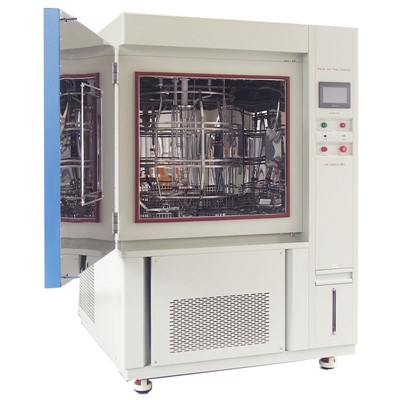


Hey there! As a supplier of Small Humidity Test Chambers, I often get asked about the different types of humidity sensors used in these chambers. It's a crucial topic because the accuracy and reliability of a humidity test chamber largely depend on the quality of its humidity sensor. So, let's dive right in and explore the various humidity sensor types you might find in a Small Humidity Test Chamber.
Capacitive Humidity Sensors
One of the most common types of humidity sensors in Small Humidity Test Chambers is the capacitive humidity sensor. These sensors work based on the principle that the capacitance of a dielectric material changes with the amount of water vapor it absorbs. In simple terms, when the humidity in the chamber increases, more water molecules are absorbed by the dielectric, which in turn changes its electrical properties.
Capacitive humidity sensors are popular for several reasons. First off, they offer high accuracy. They can measure humidity levels with a precision of around ±1% to ±3%, which is pretty impressive. This makes them ideal for applications where precise humidity control is essential, such as testing electronic components or pharmaceutical products.
Another advantage of capacitive sensors is their fast response time. They can quickly detect changes in humidity levels, allowing the test chamber to adjust its humidity settings in real-time. This is crucial for maintaining a stable and consistent testing environment.
However, capacitive sensors do have some limitations. They can be sensitive to contaminants and chemicals in the air. If exposed to certain gases or particles, the sensor's performance may degrade over time. That's why it's important to keep the test chamber clean and well-maintained when using a capacitive humidity sensor.
Resistive Humidity Sensors
Resistive humidity sensors are another option you might encounter in a Small Humidity Test Chamber. These sensors work by measuring the change in electrical resistance of a hygroscopic material as it absorbs or releases water vapor. As the humidity increases, the resistance of the material decreases, and vice versa.
Resistive sensors are known for their simplicity and low cost. They are relatively easy to manufacture, which makes them an affordable option for budget-friendly test chambers. They also have a wide operating range, capable of measuring humidity levels from 0% to 100%.
However, resistive sensors are generally less accurate than capacitive sensors. Their accuracy typically ranges from ±2% to ±5%, which may not be sufficient for applications that require high precision. Additionally, they tend to have a slower response time compared to capacitive sensors, which means they may not be able to keep up with rapid changes in humidity.
Thermal Conductivity Humidity Sensors
Thermal conductivity humidity sensors operate on the principle that the thermal conductivity of air changes with its humidity content. These sensors consist of two heated elements: one is exposed to the air in the test chamber, while the other is sealed in a reference chamber with a known humidity level.
As the humidity in the test chamber changes, the thermal conductivity of the air around the exposed element also changes. This causes a difference in temperature between the two elements, which is measured and used to calculate the humidity level.
Thermal conductivity sensors are known for their robustness and long-term stability. They are less affected by contaminants and chemicals in the air compared to capacitive and resistive sensors. This makes them suitable for harsh environments or applications where the test chamber may be exposed to pollutants.
However, thermal conductivity sensors have some drawbacks. They are less accurate than capacitive sensors, with an accuracy typically in the range of ±3% to ±5%. They also have a relatively slow response time, which may not be suitable for applications that require rapid humidity changes.
Optical Humidity Sensors
Optical humidity sensors are a more advanced type of humidity sensor that uses optical principles to measure humidity levels. These sensors work by detecting the absorption or scattering of light by water vapor in the air.
One common type of optical humidity sensor is the dew point sensor. This sensor measures the temperature at which water vapor in the air begins to condense, known as the dew point. By knowing the dew point temperature and the air temperature, the humidity level can be calculated.
Optical sensors offer several advantages. They are highly accurate, with an accuracy of up to ±0.1% in some cases. They also have a fast response time and are not affected by contaminants or chemicals in the air. This makes them suitable for high-precision applications, such as climate research or calibration laboratories.
However, optical sensors are also the most expensive option. They require complex optical components and sophisticated electronics, which drives up the cost of the test chamber. Additionally, they may require more maintenance and calibration compared to other types of sensors.
Choosing the Right Humidity Sensor for Your Small Humidity Test Chamber
So, how do you choose the right humidity sensor for your Small Humidity Test Chamber? Well, it depends on several factors, including your budget, the required accuracy, the operating environment, and the specific application.
If you need high accuracy and fast response time, a capacitive humidity sensor is probably your best bet. It's ideal for applications where precise humidity control is crucial, such as testing sensitive electronic devices or conducting scientific research.
On the other hand, if you're on a tight budget and don't need extremely high accuracy, a resistive humidity sensor may be a more suitable option. It's a cost-effective choice for basic humidity testing applications.
If you're working in a harsh environment or need a sensor that is less affected by contaminants, a thermal conductivity humidity sensor might be the way to go. It offers good long-term stability and robustness.
And if you require the highest level of accuracy and are willing to invest in a more expensive sensor, an optical humidity sensor is the ultimate choice. It's perfect for applications where precision is of the utmost importance.
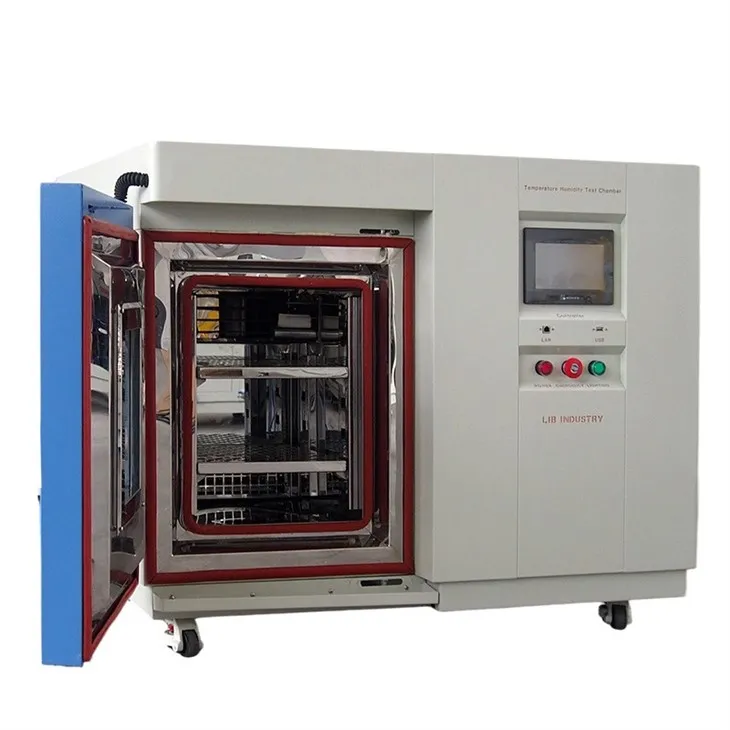
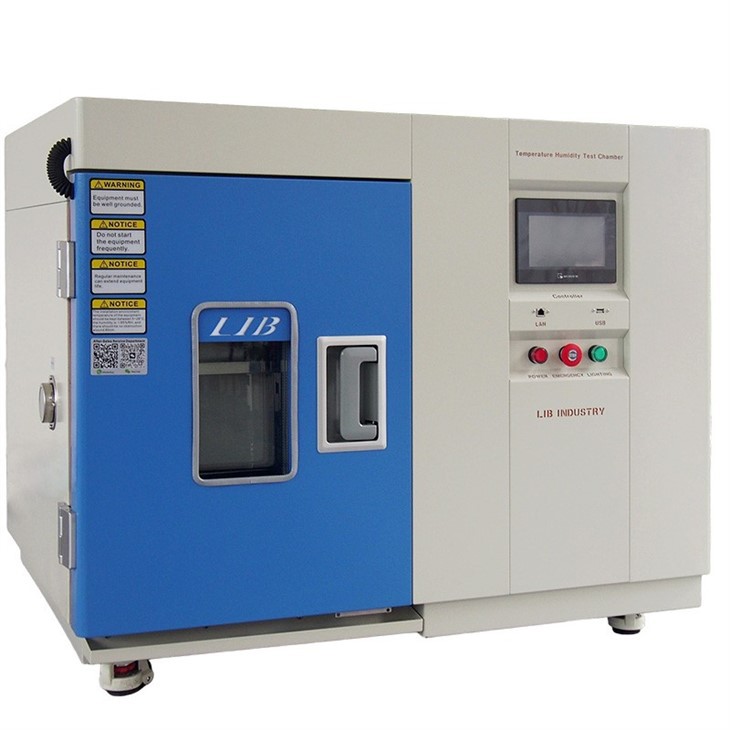
At our company, we offer a range of Small Humidity Test Chambers equipped with different types of humidity sensors to meet your specific needs. Whether you're looking for a Desktop Cold Heat Humidity Climatic Test Machine, a Compact Constant Relative Humidity Environmental Chamber, or a Small Temperature Humidity Chamber, we've got you covered.
If you're interested in learning more about our products or have any questions about humidity sensors, feel free to get in touch with us. We'd be happy to help you choose the right test chamber and sensor for your application.
References
- "Humidity Sensors: Principles, Characteristics and Applications" by N. R. Dhar and S. K. Gupta
- "Handbook of Humidity Measurement" by A. Wexler