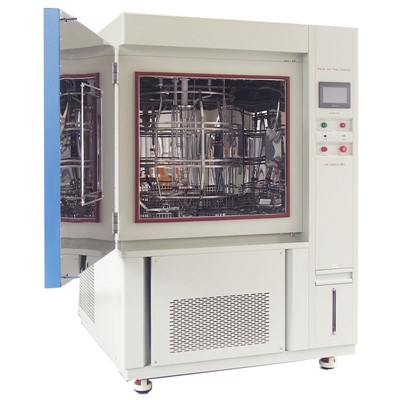


Alright, so you're in the business of testing materials for ozone resistance, and you've got yourself an Ozone Resistance Test Chamber. Great stuff! But, you might be scratching your head, wondering how to get the most accurate results out of it. That's exactly what we're going to talk about today - optimizing the test parameters in an Ozone Resistance Test Chamber.
First off, let's talk about why optimizing these parameters is so important. When you're testing materials in an ozone chamber, you want to mimic real-world conditions as closely as possible. If the test parameters are off, you might end up with inaccurate results. That could mean releasing products that don't actually have the ozone resistance they're supposed to, or spending extra time and money on unnecessary improvements.
1. Ozone Concentration
The ozone concentration is one of the most crucial parameters in an ozone resistance test. Different materials will react differently to varying levels of ozone. For example, rubber materials are commonly tested for ozone resistance, and they can show signs of cracking at different ozone concentrations depending on their composition.
So, how do you determine the right ozone concentration? Well, it depends on the intended use of the material. If it's going to be used in an environment with high ozone levels, like an industrial setting or near a highway, you'll want to test it at a relatively high ozone concentration. On the other hand, if it's for indoor use or an environment with low ozone levels, a lower concentration will do.
Most standard test methods suggest ozone concentrations ranging from 10 to 500 parts per hundred million (pphm). Our Ozone Resistance Test Chamber allows you to precisely control the ozone concentration within this range, giving you the flexibility to simulate different real-world scenarios.
2. Temperature
Temperature also plays a significant role in ozone resistance testing. Higher temperatures generally accelerate chemical reactions, including the reaction between ozone and the test material. So, if you're testing at a higher temperature, the material might show signs of degradation more quickly.
According to some research, the typical temperature range for ozone resistance testing is between 30°C and 40°C. However, just like with ozone concentration, the temperature you choose should be based on the expected operating conditions of the material. Our chamber is equipped with advanced temperature control systems that can maintain a stable temperature within the desired range, ensuring consistent and accurate test results.
3. Humidity
Humidity can affect the ozone resistance of materials as well. Moisture in the air can react with ozone to form other compounds, which might change the way ozone interacts with the test material. In some cases, high humidity can actually protect the material from ozone damage by forming a thin layer of water on its surface.
For most ozone resistance tests, a relative humidity of around 50% - 70% is recommended. Our Ozone Resistance Test Chamber has a built - in humidity control feature, allowing you to set and maintain the desired humidity level throughout the test.
4. Test Duration
The length of the test is another important parameter. The longer you run the test, the more likely you are to detect any long - term ozone resistance issues with the material. However, you also don't want to waste time on overly long tests.
The test duration can vary widely depending on the material and the test requirements. For some quick - screening tests, a few hours might be sufficient. But for more comprehensive evaluations, the test could run for days or even weeks. You need to find a balance between getting accurate results and being efficient.
5. Air Circulation
Proper air circulation inside the chamber is essential for uniform ozone distribution. If the air isn't circulating well, there might be areas in the chamber with higher or lower ozone concentrations, leading to inconsistent test results.
Our Ozone Resistance Test Chamber is designed with an efficient air circulation system. This system ensures that the ozone is evenly distributed throughout the chamber, so that all test specimens are exposed to the same conditions.
Now, let's talk about how to fine - tune these parameters. It's a good idea to start with some standard test conditions based on the relevant industry standards. Then, you can make adjustments based on your specific requirements. You can run a series of preliminary tests with different parameter settings to see how the material responds.
Keep in mind that optimizing these parameters is an ongoing process. As you test more materials and learn more about their ozone resistance characteristics, you might need to make further adjustments to the test parameters.
If you're in the market for other related testing equipment, we also offer SO2 / H2S / NO2 / Cl2 Toxic Gas Corrosion Test Equipment and H₂S Corrosive Gas Test Chamber. These can be useful if you need to test materials for resistance to other types of corrosive gases.
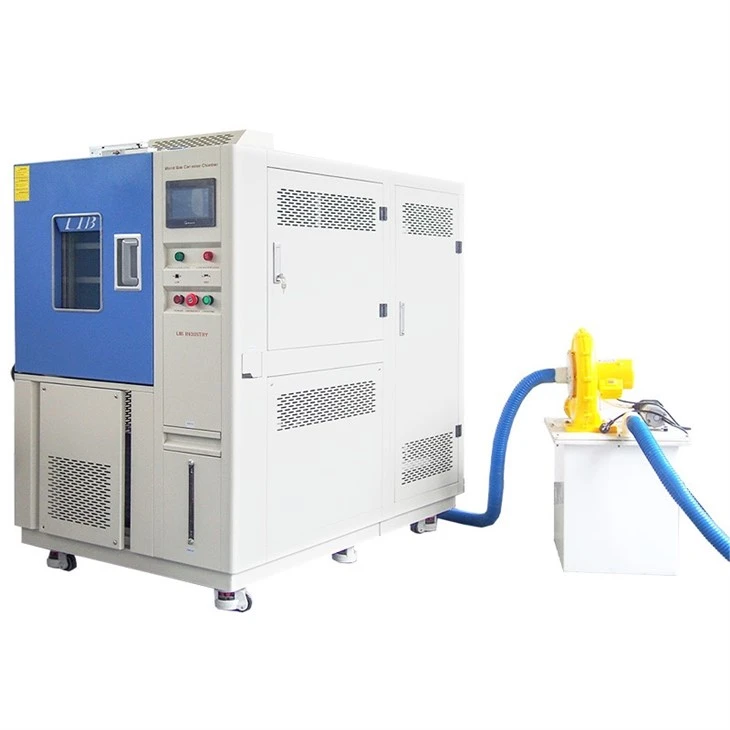

In conclusion, optimizing the test parameters in an Ozone Resistance Test Chamber is key to getting accurate and reliable test results. Our company provides high - quality chambers and the technology to help you achieve this. If you're interested in learning more about our products or need guidance on parameter optimization, we'd love to have a chat with you. Contact us to start the procurement discussion and take your ozone resistance testing to the next level.
References
- ASTM D1149 - Standard Test Method for Rubber Deterioration—Cracking in an Ozone Environment
- ISO 1431 - 1:2012 Rubber, vulcanized or thermoplastic — Resistance to ozone cracking — Part 1: Static strain test