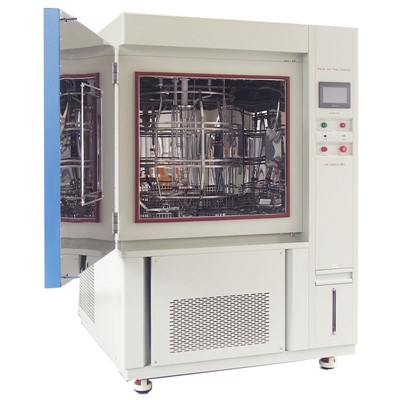


When it comes to ensuring the durability and performance of building materials, various testing methods are employed in the construction industry. One such testing approach involves the use of an Ozone Resistance Test Chamber. As a supplier of Ozone Resistance Test Chambers, I am often asked whether these chambers can be effectively used for testing building materials. In this blog post, I will explore this question in detail, examining the principles behind ozone resistance testing, its relevance to building materials, and the potential benefits and limitations of using an ozone test chamber for such applications.
Understanding Ozone Resistance Testing
Ozone, a highly reactive gas, is naturally present in the Earth's atmosphere. While it plays a crucial role in protecting the planet from harmful ultraviolet radiation, it can also cause damage to certain materials. Ozone resistance testing is designed to simulate the effects of long - term exposure to ozone on materials. In an Ozone Resistance Test Chamber, the level of ozone can be precisely controlled, along with other environmental factors such as temperature and humidity.
The primary mechanism of ozone damage to materials is through oxidation. Ozone attacks the molecular structure of polymers, rubbers, and other organically - based materials, causing them to crack, harden, or lose their mechanical properties over time. A well - calibrated ozone test chamber injects a specific concentration of ozone into an enclosed space and subjects the test specimens to the ozone - rich environment for a set period. This accelerated aging process allows manufacturers to predict how materials will perform under real - world conditions over an extended period.
Relevance of Ozone Resistance Testing to Building Materials
Building materials are often exposed to environmental factors, including ozone. Some of these materials may be used in outdoor applications, where they are directly exposed to the ambient ozone in the atmosphere. Others might be used in indoor environments with high levels of ozone due to air purification systems or electrical equipment.
1. Sealants and Gaskets
Sealants and gaskets are used in buildings to prevent air, water, and dust infiltration. They are typically made of rubber or polymer - based materials. Ozone can cause these materials to become brittle and crack, leading to a loss of their sealing ability. By testing these materials in an Ozone Resistance Test Chamber, manufacturers can ensure that the sealants and gaskets maintain their integrity over time, providing long - term protection for the building.
2. Paints and Coatings
Paints and coatings not only enhance the aesthetic appeal of buildings but also protect the underlying structures from corrosion, moisture, and other environmental factors. Ozone exposure can cause fading, chalking, and peeling of paint and coating systems. Ozone resistance testing can help in formulating paint and coating products that can withstand ozone - induced degradation, ensuring that the building remains visually appealing and protected.
3. Insulation Materials
Insulation materials play a vital role in maintaining the energy efficiency of buildings. Some types of insulation, such as those made from polymers, can be affected by ozone. If an insulation material loses its integrity due to ozone exposure, it may result in reduced thermal performance and increased energy consumption. Testing insulation materials in an ozone test chamber can verify their long - term performance and reliability.
Advantages of Using an Ozone Resistance Test Chamber for Building Materials
1. Accelerated Testing
One of the main advantages of using an ozone test chamber is the ability to conduct accelerated aging tests. In real - world conditions, the effects of ozone on building materials may take years to become apparent. However, in a test chamber, the exposure to high levels of ozone can accelerate the aging process, allowing manufacturers to obtain test results in a relatively short time. This enables rapid product development and improvement.
2. Precise Control
An ozone test chamber provides precise control over the testing environment. The concentration of ozone, temperature, and humidity can be accurately regulated, ensuring that the test conditions are consistent and reproducible. This precision allows for reliable comparison between different materials and test results.


3. Customizable Testing
The testing parameters in an ozone test chamber can be customized according to the specific requirements of the building materials. Different materials may require different levels of ozone exposure and environmental conditions. For example, materials used in coastal areas may need to be tested under higher humidity conditions, while those used in industrial areas may require exposure to higher ozone concentrations.
Limitations of Using an Ozone Resistance Test Chamber for Building Materials
1. Simplified Environmental Conditions
Although an ozone test chamber can accurately simulate ozone exposure, it represents a simplified version of the real - world environment. In reality, building materials are exposed to a complex combination of environmental factors, including sunlight, rain, wind, and pollutants. The test chamber may not fully capture the synergistic effects of these factors on the materials.
2. Limited Material Scope
Some building materials may not be significantly affected by ozone. For example, materials such as metals, concrete, and glass are generally not susceptible to ozone - induced degradation. Therefore, using an ozone test chamber for these materials may not provide meaningful results.
Other Related Testing Chambers
In addition to the Ozone Resistance Test Chamber, there are other types of testing chambers that can be used for evaluating building materials. For example, the Ozone Aging Test Machine is similar to the ozone test chamber but may have different features and applications. The SO2 Corrosion Test Chamber is used to simulate the corrosion effects of sulfur dioxide gas on building materials, which is common in industrial areas. The H₂S Corrosive Gas Test Chamber is designed to test the resistance of materials to hydrogen sulfide gas, which may be present in some underground or sewer environments.
Conclusion and Call to Action
In conclusion, an Ozone Resistance Test Chamber can be a valuable tool for testing certain building materials, especially those made of polymers, rubbers, and organic - based substances. It offers the advantages of accelerated testing, precise control, and customizable test parameters. However, it is important to recognize its limitations and consider using other testing methods in conjunction with ozone testing to fully evaluate the performance of building materials under real - world conditions.
If you are involved in the production, research, or quality control of building materials and are interested in using an Ozone Resistance Test Chamber for your testing needs, I encourage you to reach out to us. Our team of experts can provide you with detailed information about our products, help you select the most suitable test chamber for your specific requirements, and offer technical support throughout the testing process. Contact us to start a discussion about your testing needs and explore how our Ozone Resistance Test Chambers can contribute to the quality and durability of your building materials.
References
- ASTM D1149 - Standard Test Method for Rubber Deterioration—Cracking in an Ozone Environment
- ISO 1431 - 1:2012 Rubber, vulcanized or thermoplastic — Resistance to ozone cracking — Part 1: Static and dynamic strain testing