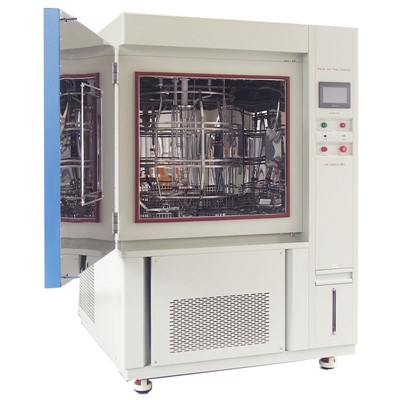


Hey there! As a supplier of ASTM G155 Test Chamber, I often get asked about the heating system in these chambers. In this blog post, I'm gonna break it down for you in a way that's easy to understand.
First off, let's understand what an ASTM G155 Test Chamber is for. It's a crucial tool used to simulate natural weathering conditions for materials. This helps manufacturers test how their products will hold up over time when exposed to the sun's ultraviolet (UV) rays, heat, and moisture. The chamber mimics these conditions in a controlled environment, allowing for accelerated testing.
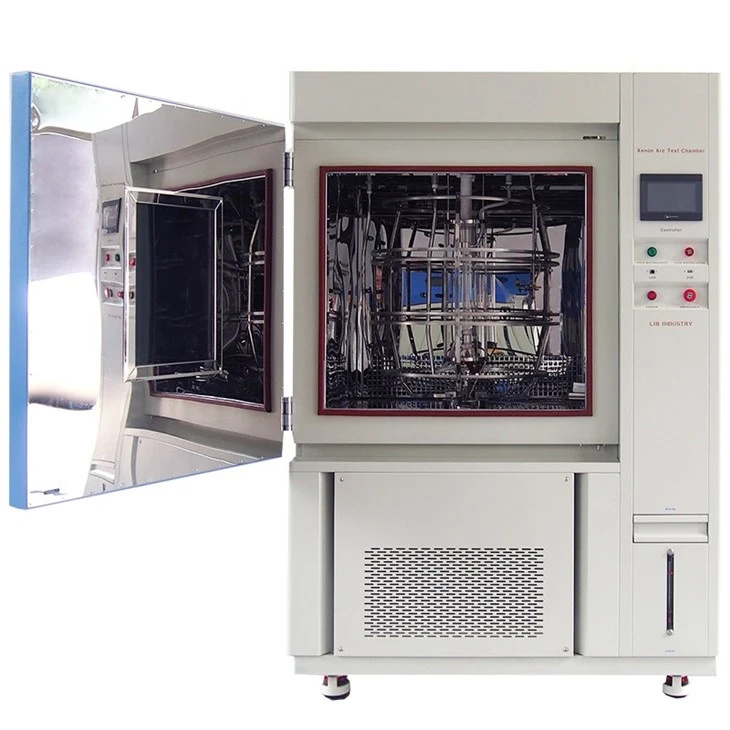
Now, let's dive into the heating system. The heating system in an ASTM G155 Test Chamber is designed to replicate the temperature variations that materials would experience in real - world weathering scenarios. There are a few key components that make up this heating system.
One of the main components is the heating element. These are usually resistance heaters. They work by passing an electric current through a resistive material, which generates heat. The heat is then transferred to the air inside the chamber. Resistance heaters are popular because they're reliable, easy to control, and can reach the required temperatures quickly.
The temperature inside the chamber needs to be precisely controlled. That's where the temperature controller comes in. It's like the brain of the heating system. The controller monitors the temperature inside the chamber using a temperature sensor, typically a thermocouple or a resistance temperature detector (RTD). If the temperature is lower than the set value, the controller will send a signal to the heating element to increase the heat output. On the other hand, if the temperature gets too high, it will reduce the power supplied to the heating element.
Another important part of the heating system is the air circulation system. This helps in distributing the heat evenly throughout the chamber. Fans are used to move the heated air around. Without proper air circulation, there could be hot and cold spots inside the chamber, which would lead to inaccurate test results. The fans ensure that all the test specimens are exposed to a uniform temperature.
The heating system also needs to work in harmony with the other environmental factors in the chamber, such as humidity and light. For example, when the temperature rises, the relative humidity inside the chamber can change. So, the chamber's control system has to adjust the humidity levels accordingly to maintain the desired test conditions.
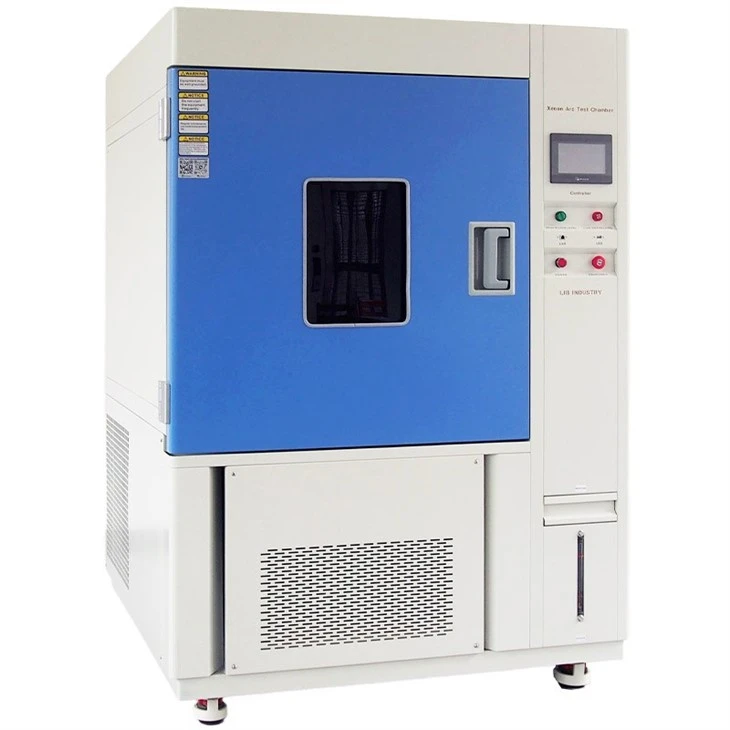
Let's talk about some of the benefits of a well - designed heating system in an ASTM G155 Test Chamber. Firstly, it allows for accurate and reproducible test results. When the temperature is controlled precisely and evenly distributed, manufacturers can trust the data they get from the tests. This helps them make informed decisions about the quality and durability of their products.
Secondly, a reliable heating system can save time and money. Faster heating and cooling cycles mean that tests can be completed more quickly. This allows manufacturers to bring their products to market faster. Also, since the system is energy - efficient, it reduces operating costs.
Now, if you're in the market for an ASTM G155 Test Chamber, you might be interested in our Xenon Accelerated Weathering Tester. It's a top - notch product that combines a high - performance heating system with other advanced features to provide accurate and reliable weathering tests.
We also offer the Xenon Lamp Weathering Test Chamber, which is another great option for those looking to test materials under simulated weather conditions.
If you want to learn more about our products and how our heating systems can benefit your testing needs, don't hesitate to reach out. We're here to answer any questions you might have and guide you through the purchasing process. Whether you're a big manufacturer or a small research lab, we've got the right solution for you.
In conclusion, the heating system in an ASTM G155 Test Chamber is a complex but crucial part of the overall testing setup. It plays a vital role in simulating real - world weathering conditions and ensuring accurate test results. So, if you're in need of such a chamber, make sure to choose one with a reliable and efficient heating system.
References
- ASTM International. Standard Practice for Operating Xenon Arc Light Apparatus for Exposure of Non - Metallic Materials. ASTM G155 - XX.
- Textbooks on environmental testing and materials science for information on heating systems in test chambers.