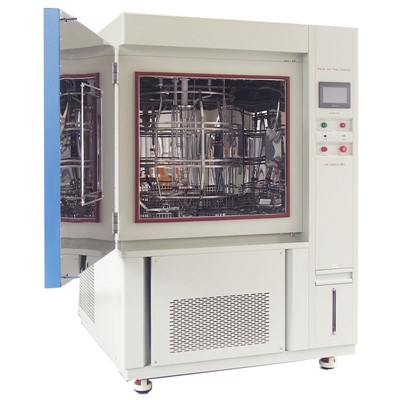


As a supplier of Xenon Weatherometers, I often encounter questions from customers regarding the accuracy of these devices in simulating UV - B radiation. This topic is of great significance as UV - B radiation plays a crucial role in the weathering and degradation of materials. In this blog, I will delve into the capabilities of Xenon Weatherometers in accurately simulating UV - B radiation, exploring the technology behind them, the factors affecting accuracy, and real - world applications.
Understanding UV - B Radiation
UV - B radiation, with wavelengths ranging from 280 to 315 nanometers, is a part of the ultraviolet spectrum that reaches the Earth's surface. It is known for its ability to cause significant damage to materials, including plastics, paints, textiles, and even biological organisms. The intensity and spectral distribution of UV - B radiation vary depending on geographical location, time of day, season, and atmospheric conditions.
How Xenon Weatherometers Work
Xenon Weatherometers are designed to simulate the natural weathering process by exposing test specimens to a combination of light, heat, and moisture. At the heart of these devices is a xenon arc lamp, which emits a broad - spectrum light that closely resembles natural sunlight, including UV - A, UV - B, and visible light.
The xenon arc lamp produces a continuous spectrum of light, and through the use of filters, the spectral output can be adjusted to match specific requirements. For simulating UV - B radiation, special filters are employed to enhance the output in the 280 - 315 nm range. These filters are carefully selected and calibrated to ensure that the intensity and spectral distribution of the UV - B radiation within the chamber closely mimic natural sunlight.
Factors Affecting the Accuracy of UV - B Simulation
While Xenon Weatherometers are capable of simulating UV - B radiation, several factors can affect the accuracy of this simulation.


Lamp Aging
Over time, the output of the xenon arc lamp can degrade. As the lamp ages, the intensity of the UV - B radiation may decrease, and the spectral distribution may shift. Regular lamp replacement and calibration are essential to maintain the accuracy of UV - B simulation. Most modern Xenon Weatherometers are equipped with lamp monitoring systems that can detect changes in lamp output and alert users when it is time for a replacement.
Filter Performance
The filters used in Xenon Weatherometers are critical for accurate UV - B simulation. Filters can become dirty or damaged over time, which can affect their ability to transmit the desired wavelengths of light. Regular cleaning and inspection of filters are necessary to ensure optimal performance. Additionally, filter replacement may be required periodically to maintain the accuracy of the spectral output.
Chamber Environment
The environment within the Xenon Weatherometer chamber can also impact the accuracy of UV - B simulation. Temperature and humidity can affect the performance of the lamp and filters. For example, high temperatures can cause the lamp to overheat, leading to changes in its output. Proper temperature and humidity control within the chamber are essential to ensure stable and accurate UV - B simulation.
Real - World Applications and the Need for Accurate UV - B Simulation
Accurate simulation of UV - B radiation is crucial in various industries.
Plastics Industry
In the plastics industry, UV - B radiation can cause degradation of polymers, leading to changes in appearance, mechanical properties, and chemical stability. Xenon Weatherometers are used to test the weatherability of plastic products, such as automotive parts, outdoor furniture, and packaging materials. By accurately simulating UV - B radiation, manufacturers can predict how their products will perform over time in real - world environments and make necessary improvements to enhance durability.
Paints and Coatings Industry
Paints and coatings are exposed to sunlight and weather conditions, and UV - B radiation can cause fading, chalking, and peeling. Xenon Weatherometers are used to evaluate the colorfastness and durability of paints and coatings. Accurate simulation of UV - B radiation allows manufacturers to develop products that can withstand long - term exposure to sunlight and maintain their aesthetic and protective properties.
Textile Industry
Textiles used in outdoor applications, such as awnings, tents, and sportswear, are also affected by UV - B radiation. UV - B can cause fading, weakening of fibers, and loss of colorfastness. Xenon Weatherometers are used to test the UV resistance of textiles, enabling manufacturers to produce high - quality products that can withstand the harsh effects of sunlight.
Our Xenon Weatherometer Solutions
At our company, we offer a range of high - quality Xenon Weatherometers, including the UV Weather Resistance Test Chamber, Weatherability Testing Xenon Machine, and Xenon Weathering Test Chamber.
Our Xenon Weatherometers are designed with advanced technology to ensure accurate and reliable simulation of UV - B radiation. We use high - quality xenon arc lamps and precision filters to achieve a spectral output that closely matches natural sunlight. Our chambers are equipped with state - of - the - art monitoring and control systems to maintain stable environmental conditions and ensure consistent test results.
We also provide comprehensive after - sales service, including lamp replacement, filter maintenance, and calibration. Our team of experts is available to assist customers with any questions or concerns they may have regarding the operation and performance of our Xenon Weatherometers.
Conclusion
In conclusion, Xenon Weatherometers are capable of accurately simulating UV - B radiation, but it requires careful attention to factors such as lamp aging, filter performance, and chamber environment. Our company is committed to providing high - quality Xenon Weatherometer solutions that meet the needs of various industries. If you are in need of accurate UV - B simulation for your product testing, we invite you to contact us for more information and to discuss your specific requirements. Our team is ready to assist you in selecting the right Xenon Weatherometer for your application and to provide you with the support you need to ensure successful testing.
References
- ASTM G155 - Standard Practice for Operating Xenon Arc Light Apparatus for Exposure of Nonmetallic Materials.
- ISO 4892 - 2 - Plastics -- Methods of exposure to laboratory light sources -- Part 2: Xenon - arc lamps.
- BS EN ISO 11341:2020 Paints and varnishes -- Artificial weathering and exposure to artificial radiation -- Exposure to filtered xenon - arc radiation.