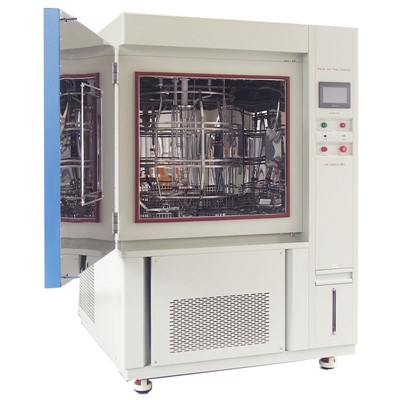


Hey there! I'm a supplier of Walk-In Environmental Chambers, and I often get asked about the dustproof level of these chambers. So, I thought I'd write a blog post to shed some light on this topic.
First off, let's talk about why dustproofing is important in a walk-in environmental chamber. These chambers are used for a variety of purposes, from testing products in different environmental conditions to storing sensitive equipment. Dust can be a real nuisance in these scenarios. It can contaminate samples, damage sensitive components, and even affect the accuracy of test results. So, having a good dustproof level is crucial to ensure the proper functioning and longevity of the chamber.
The dustproof level of a walk-in environmental chamber is usually measured using the Ingress Protection (IP) code. The IP code is an international standard that classifies the degree of protection provided by an enclosure against the ingress of solid objects (like dust) and liquids. It consists of two digits. The first digit represents the protection against solid objects, and the second digit represents the protection against liquids.
For example, an IP5X rating means that the enclosure provides protection against the ingress of dust to the extent that it does not interfere with the satisfactory operation of the equipment inside. The "X" in the second digit indicates that there is no specific protection rating for liquids in this case. An IP6X rating, on the other hand, means that the enclosure is completely dust-tight.
When it comes to walk-in environmental chambers, the dustproof level can vary depending on the specific model and its intended use. For general-purpose chambers, an IP54 rating is often sufficient. This provides a good level of protection against dust and also some protection against splashing water. However, for applications where a higher level of dust protection is required, such as in the semiconductor industry or for testing sensitive electronic components, an IP65 or higher rating may be necessary.
Let's take a closer look at how these different dustproof levels are achieved. To achieve a high dustproof rating, the chamber needs to be well-sealed. This includes sealing the doors, windows, and any other openings in the chamber. Special gaskets and seals are used to prevent dust from entering. The construction materials of the chamber also play a role. For example, using smooth, non-porous materials can help to reduce the accumulation of dust.
Another important factor is the air filtration system. A good air filtration system can remove dust particles from the air inside the chamber, helping to maintain a clean environment. Some high-end walk-in environmental chambers are equipped with HEPA (High-Efficiency Particulate Air) filters, which can remove up to 99.97% of dust particles as small as 0.3 microns.
Now, let's talk about some of the applications where a high dustproof level is essential. One of the most common applications is in the automotive industry. Car manufacturers use walk-in environmental chambers to test the performance of their vehicles and components under different environmental conditions. Dust can cause damage to the engine, electrical systems, and other components, so a high dustproof level is necessary to ensure accurate test results.
The aerospace industry is another area where dustproofing is crucial. Aircraft components need to be tested in a clean environment to ensure their reliability and safety. A walk-in environmental chamber with a high dustproof level can provide the necessary conditions for these tests.
In the electronics industry, dust can cause serious problems for electronic components. It can lead to short circuits, overheating, and other malfunctions. Therefore, manufacturers of electronic devices often use walk-in environmental chambers with a high dustproof level to test their products.
If you're in the market for a walk-in environmental chamber, it's important to consider the dustproof level that you need. Think about the specific applications that you'll be using the chamber for and the level of dust protection that is required. You may also want to consider other features, such as temperature and humidity control, air circulation, and the size of the chamber.
At our company, we offer a wide range of walk-in environmental chambers with different dustproof levels. Whether you need a chamber for general-purpose testing or for a specific industry application, we have the right solution for you. Our chambers are designed and manufactured to the highest standards, ensuring reliable performance and long-term durability.
If you're interested in learning more about our walk-in environmental chambers or have any questions about the dustproof level, feel free to [contact us]. We'd be happy to help you find the perfect chamber for your needs.
In addition to walk-in environmental chambers, we also offer other types of test chambers, such as Cryogenic Test Chamber, Environmental Simulation Temperature Humidity Test Machine, and Temperature Humidity Calibration Chamber. These chambers are also designed to provide accurate and reliable testing in different environmental conditions.
So, if you're looking for high-quality test chambers with excellent dustproof capabilities, look no further. Contact us today to discuss your requirements and get a quote. We're confident that we can provide you with the best solution for your testing needs.

References
- International Electrotechnical Commission (IEC). (2004). IEC 60529: Degrees of protection provided by enclosures (IP Code).
- Various industry standards and guidelines related to environmental testing and dust protection.