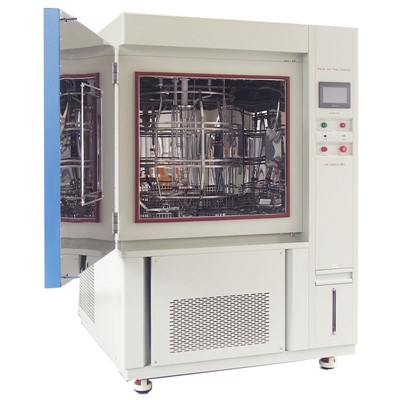


Condensation in a temperature humidity chamber can pose significant challenges to the accuracy and reliability of test results. As a leading supplier of temperature humidity chambers, we understand the importance of preventing condensation to ensure optimal performance and longevity of our equipment. In this blog post, we will explore the causes of condensation in temperature humidity chambers and provide practical solutions to help you prevent it.
Understanding the Causes of Condensation
Condensation occurs when warm, moist air comes into contact with a cold surface, causing the water vapor in the air to condense into liquid water. In a temperature humidity chamber, this can happen for several reasons:
- Temperature differentials: When there is a significant difference between the temperature inside the chamber and the temperature of the chamber walls or other surfaces, condensation can occur. For example, if the chamber is set to a low temperature and the walls are at a higher temperature, the warm, moist air inside the chamber will come into contact with the cold walls, causing condensation.
- High humidity levels: If the humidity level inside the chamber is too high, there is more water vapor in the air, increasing the likelihood of condensation. This can happen if the chamber is not properly ventilated or if the humidity control system is not functioning correctly.
- Poor insulation: If the chamber is not properly insulated, heat can transfer from the outside environment to the inside of the chamber, causing temperature differentials and increasing the risk of condensation.
Preventing Condensation in a Temperature Humidity Chamber
Now that we understand the causes of condensation, let's explore some practical solutions to help you prevent it in your temperature humidity chamber:
- Maintain proper temperature and humidity levels: One of the most effective ways to prevent condensation is to maintain proper temperature and humidity levels inside the chamber. This can be achieved by using a reliable temperature and humidity control system that is capable of accurately maintaining the desired conditions. Make sure to regularly calibrate the control system to ensure its accuracy.
- Improve ventilation: Proper ventilation is essential for preventing condensation in a temperature humidity chamber. Make sure the chamber has adequate ventilation to allow for the exchange of air and to remove excess moisture. You can also use a dehumidifier to help reduce the humidity level inside the chamber.
- Insulate the chamber: Insulating the chamber can help reduce temperature differentials and prevent heat transfer from the outside environment to the inside of the chamber. This can be achieved by using insulation materials such as foam or fiberglass. Make sure to insulate all surfaces of the chamber, including the walls, ceiling, and floor.
- Use anti-condensation coatings: Anti-condensation coatings can be applied to the interior surfaces of the chamber to help prevent condensation. These coatings work by reducing the surface tension of the water droplets, causing them to spread out and evaporate more quickly. Make sure to choose a coating that is compatible with the materials used in the chamber.
- Monitor the chamber regularly: Regular monitoring of the chamber is essential for detecting and preventing condensation. Make sure to check the temperature and humidity levels inside the chamber regularly and look for signs of condensation, such as water droplets on the walls or equipment. If you notice any signs of condensation, take immediate action to address the issue.
Our Temperature Humidity Chamber Solutions
At [Our Company], we offer a wide range of temperature humidity chambers designed to meet the needs of various industries and applications. Our chambers are equipped with advanced temperature and humidity control systems that are capable of accurately maintaining the desired conditions, helping to prevent condensation and ensure reliable test results.
In addition to our standard chambers, we also offer custom solutions tailored to your specific requirements. Our team of experienced engineers can work with you to design and build a chamber that meets your exact specifications, ensuring optimal performance and efficiency.
Some of our popular temperature humidity chamber models include:
- Environmental Temperature Calibration Chamber: This chamber is designed for accurate temperature calibration and testing. It features a high-precision temperature control system and a spacious interior, making it ideal for a wide range of applications.
- Stability Chamber Temperature and Humidity: This chamber is specifically designed for stability testing of pharmaceutical products, food, and other sensitive materials. It offers precise temperature and humidity control, ensuring the stability and integrity of your samples.
- Walk-In Humidity Chamber: This chamber is suitable for large-scale testing and production applications. It provides a spacious interior and a high-capacity humidity control system, allowing you to test multiple samples simultaneously.
Contact Us for More Information
If you are interested in learning more about our temperature humidity chambers or need help preventing condensation in your existing chamber, please contact us today. Our team of experts will be happy to answer your questions and provide you with the information you need to make an informed decision.


We look forward to working with you to ensure the optimal performance and reliability of your temperature humidity chamber.
References
- ASHRAE Handbook - Fundamentals. American Society of Heating, Refrigerating and Air-Conditioning Engineers, Inc.
- ISO 105-B01:2019. Textiles - Tests for colour fastness - Part B01: Colour fastness to light: Daylight. International Organization for Standardization.
- ASTM D4339-13. Standard Practice for Conditioning and Testing Flexible Barrier Materials. American Society for Testing and Materials.