


Hey there! I'm a supplier of noxious gas chambers, and today I wanna chat about how the gases in these chambers are tested for purity. It's a super important topic, especially if you're in industries like automotive, electronics, or materials testing, where accurate gas purity is crucial for reliable test results.
First off, let's talk about why gas purity matters. In a noxious gas chamber, the gases are used to simulate real - world conditions, like exposure to corrosive or reactive substances. If the gas isn't pure, it can lead to inaccurate test results. For example, if you're testing a material's resistance to sulfur dioxide (SO₂) in a SO2 Corrosion Test Chamber, any impurities in the SO₂ gas could cause unexpected reactions and give you false data about the material's performance.
The methods for testing gas purity can vary depending on the type of gas and the level of accuracy required. One of the most common methods is gas chromatography. This technique works by separating the different components of a gas mixture. Here's how it goes:
The gas sample is injected into a chromatography column. Inside the column, there's a stationary phase, which can be a solid or a liquid coated on a solid support. The different gases in the sample interact with the stationary phase in different ways. Some gases stick to the stationary phase more than others, so they move through the column at different speeds.
As the gases exit the column, they pass through a detector. The detector measures the amount of each gas component based on its physical or chemical properties. For example, a thermal conductivity detector can measure how well the gas conducts heat, which is different for different gases. By analyzing the detector's output, we can figure out the composition of the gas sample and determine its purity.
Another method is mass spectrometry. This is a more advanced technique that can provide very detailed information about the gas composition. In mass spectrometry, the gas molecules are ionized, which means they're given an electric charge. These ions are then accelerated through a magnetic or electric field, and the path they take depends on their mass - to - charge ratio.
A detector at the end of the field measures the number and mass of the ions. By analyzing the mass spectrum, we can identify the different gas components and their relative amounts. Mass spectrometry is great for detecting trace impurities in a gas sample, even at very low concentrations.
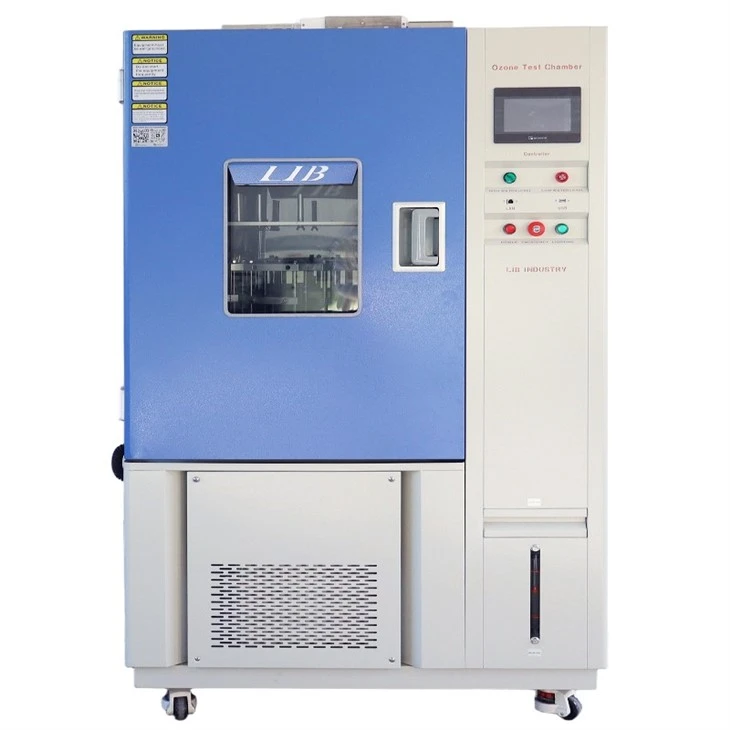
For some gases, like ozone, we can use ultraviolet (UV) absorption spectroscopy. Ozone absorbs UV light at specific wavelengths. By shining UV light through a gas sample and measuring the amount of light that's absorbed, we can determine the concentration of ozone in the sample. This method is relatively simple and can be used in real - time to monitor the ozone level in an Ozone Resistance Test Chamber.
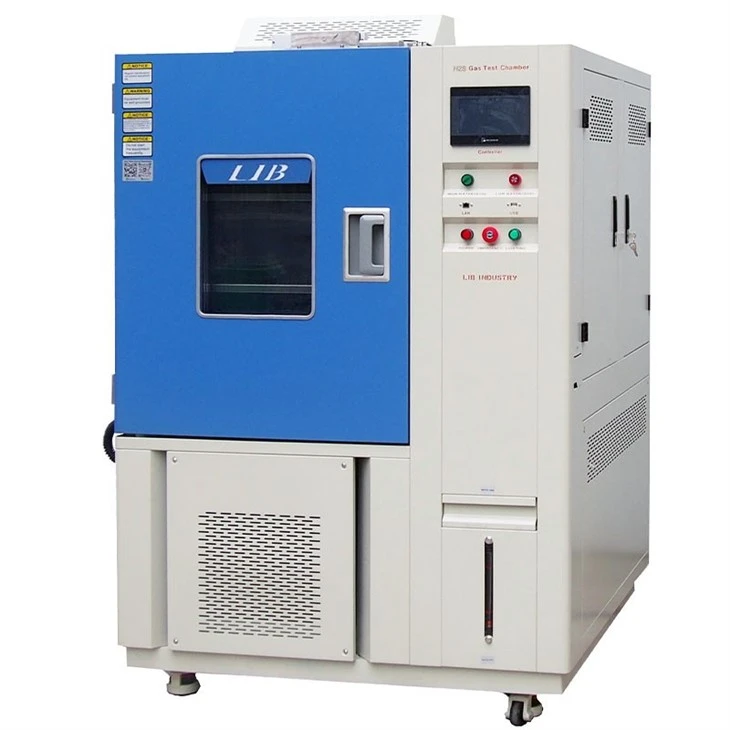
When it comes to hydrogen sulfide (H₂S), electrochemical sensors are often used. These sensors work based on the electrochemical reaction between the H₂S gas and an electrode. The reaction generates an electric current, and the magnitude of the current is proportional to the concentration of H₂S in the gas sample. This method is quick and can be used for continuous monitoring in an H₂S Corrosive Gas Test Chamber.
Now, let's talk about the challenges in testing gas purity in a noxious gas chamber. One of the biggest challenges is getting a representative gas sample. The gas inside the chamber might not be evenly mixed, especially if there are temperature or pressure gradients. To get an accurate measurement, we need to make sure the sample we take is a true reflection of the overall gas composition in the chamber.
Another challenge is dealing with the reactivity of noxious gases. Some gases, like ozone and H₂S, are very reactive and can react with the materials in the sampling equipment or the test chamber itself. This can change the composition of the gas sample and lead to inaccurate results. To avoid this, we need to use materials that are resistant to the gas and minimize the contact time between the gas and the sampling equipment.
We also need to calibrate our testing equipment regularly. Over time, the performance of the detectors and sensors can change, which can affect the accuracy of the measurements. Calibration involves comparing the readings of the equipment with a known standard gas sample. By adjusting the equipment based on the calibration results, we can ensure that it's giving us accurate and reliable data.
As a noxious gas chamber supplier, we understand the importance of gas purity testing. That's why we design our chambers to make it easy to take gas samples for testing. We also provide support and guidance on gas purity testing to our customers. Whether you're using our SO2 Corrosion Test Chamber, Ozone Resistance Test Chamber, or H₂S Corrosive Gas Test Chamber, we want to make sure you get the most accurate test results possible.
If you're in the market for a noxious gas chamber or have any questions about gas purity testing, don't hesitate to reach out. We're here to help you find the right solution for your testing needs. Whether you're a small - scale research lab or a large - scale manufacturing facility, we've got the expertise and the products to support you.
References
- Skoog, D. A., West, D. M., Holler, F. J., & Crouch, S. R. (2014). Fundamentals of Analytical Chemistry. Cengage Learning.
- McMurry, J., & Fay, R. C. (2012). Chemistry. Pearson.


