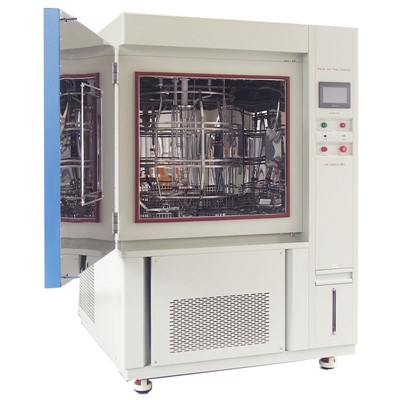


As a leading supplier of cryogenic test chambers, I've been frequently asked whether our chambers can be used for superconducting material testing. This question is not only relevant to scientific research but also has significant implications for industries looking to harness the unique properties of superconducting materials. In this blog post, I'll explore the feasibility of using cryogenic test chambers for superconducting material testing, highlighting the technical requirements, benefits, and potential challenges.
Technical Requirements for Superconducting Material Testing
Superconductors are materials that exhibit zero electrical resistance and expulsion of magnetic fields when cooled below a certain critical temperature. To test these materials, precise control of temperature is essential. Cryogenic test chambers are designed to achieve and maintain extremely low temperatures, typically ranging from -270°C to room temperature. This temperature range is well-suited for testing most superconducting materials, which have critical temperatures below -100°C.
In addition to temperature control, superconducting material testing often requires the ability to apply and measure magnetic fields. Many of our cryogenic test chambers are equipped with magnetic field generators and sensors, allowing for comprehensive testing of superconducting properties. These features enable researchers to study the behavior of superconductors under different magnetic field strengths and orientations, which is crucial for understanding their performance in real-world applications.
Benefits of Using Cryogenic Test Chambers for Superconducting Material Testing
One of the primary benefits of using cryogenic test chambers for superconducting material testing is the ability to create a controlled environment. By precisely controlling the temperature and magnetic field, researchers can eliminate external factors that may affect the performance of the superconducting material. This allows for more accurate and reproducible test results, which are essential for developing new superconducting technologies.


Another advantage of using cryogenic test chambers is the flexibility they offer. Our chambers can be customized to meet the specific requirements of different superconducting materials and testing protocols. For example, some chambers are designed to accommodate large samples, while others are optimized for high-precision measurements. This flexibility allows researchers to conduct a wide range of tests, from basic material characterization to advanced device testing.
Furthermore, cryogenic test chambers provide a safe and reliable testing environment. Superconducting materials often require the use of liquid nitrogen or helium to achieve low temperatures, which can be hazardous if not handled properly. Our chambers are designed with safety features such as leak detection systems and emergency shut-off valves to ensure the safety of researchers and the integrity of the testing equipment.
Potential Challenges and Solutions
While cryogenic test chambers offer many benefits for superconducting material testing, there are also some potential challenges that need to be addressed. One of the main challenges is the high cost of cryogenic equipment and the associated operating expenses. Liquid nitrogen and helium are expensive cryogens, and the energy consumption of cryogenic systems can be significant. To mitigate these costs, we offer a range of energy-efficient cryogenic test chambers that are designed to minimize the use of cryogens and reduce operating expenses.
Another challenge is the complexity of superconducting material testing. Superconductors exhibit unique properties that require specialized testing techniques and equipment. To address this challenge, we provide comprehensive technical support and training to our customers. Our team of experts can help researchers select the right test chamber for their specific needs and provide guidance on how to conduct accurate and reliable tests.
Applications of Superconducting Materials and the Role of Cryogenic Test Chambers
Superconducting materials have a wide range of applications in various industries, including energy, healthcare, and transportation. In the energy sector, superconductors are used in power transmission cables, transformers, and generators to improve efficiency and reduce energy losses. In healthcare, superconducting magnets are used in magnetic resonance imaging (MRI) machines to provide high-resolution images of the human body. In transportation, superconducting materials are being explored for use in high-speed trains and magnetic levitation (maglev) systems.
Cryogenic test chambers play a crucial role in the development and optimization of superconducting technologies. By providing a controlled environment for testing, these chambers enable researchers to study the behavior of superconducting materials under different conditions and to identify the factors that affect their performance. This knowledge is essential for developing new superconducting materials with improved properties and for designing more efficient and reliable superconducting devices.
Related Products and Their Applications
In addition to cryogenic test chambers, we also offer a range of other temperature and environmental testing chambers, including Controlled Temperature Chamber For Automotive, Temperature Humidity Environmental Chamber, and Temperature Humidity Pressure Chamber. These chambers are designed to meet the specific testing requirements of different industries, such as automotive, aerospace, and electronics.
The Controlled Temperature Chamber For Automotive is used to test the performance of automotive components under different temperature conditions. This chamber can simulate extreme temperatures, from -40°C to 120°C, and is equipped with advanced control systems to ensure precise temperature regulation. The Temperature Humidity Environmental Chamber is designed to test the effects of temperature and humidity on electronic devices and materials. This chamber can simulate a wide range of environmental conditions, from high humidity to low temperature, and is ideal for testing the reliability and durability of electronic products. The Temperature Humidity Pressure Chamber is used to test the performance of aerospace components under different temperature, humidity, and pressure conditions. This chamber can simulate the harsh environments encountered in space and aviation, and is equipped with advanced sensors and control systems to ensure accurate and reliable testing.
Conclusion
In conclusion, cryogenic test chambers are well-suited for superconducting material testing. They provide a controlled environment for precise temperature and magnetic field control, which is essential for studying the behavior of superconducting materials. The benefits of using cryogenic test chambers include accurate and reproducible test results, flexibility, and safety. While there are some potential challenges, such as high costs and complex testing requirements, these can be addressed through energy-efficient designs and comprehensive technical support.
If you are interested in using cryogenic test chambers for superconducting material testing or any other temperature and environmental testing applications, please contact us to discuss your specific requirements. Our team of experts will be happy to provide you with more information and to help you select the right test chamber for your needs.
References
- Tinkham, M. (2004). Introduction to Superconductivity. Dover Publications.
- Poole, C. P., Jr., Farach, H. A., & Creswick, R. J. (2007). Superconductivity. Academic Press.
- Larbalestier, D. C., Lee, D. K., & Feenstra, R. (2001). High-temperature superconductors for electric power applications. Nature, 414(6865), 368-377.