



Can a Mini Temperature Chamber be used for testing metal materials?
In the field of materials science and engineering, the testing of metal materials is of paramount importance. Metal materials are widely used in various industries, from aerospace to automotive, and understanding their performance under different environmental conditions is crucial for ensuring the safety and reliability of products. One question that often arises is whether a mini temperature chamber can be effectively used for testing metal materials. As a supplier of mini temperature chambers, I will delve into this topic and provide insights based on scientific knowledge and practical experience.
Understanding Mini Temperature Chambers
Mini temperature chambers, also known as benchtop temperature chambers, are compact and versatile testing equipment. They are designed to create and control specific temperature and humidity conditions within a relatively small space. These chambers are typically used for a variety of testing purposes, including electronic component testing, pharmaceutical stability testing, and material aging studies.
The main advantages of mini temperature chambers include their compact size, which makes them suitable for laboratories with limited space, and their relatively low cost compared to larger industrial chambers. They also offer precise temperature and humidity control, allowing for accurate testing conditions.
Testing Metal Materials in Mini Temperature Chambers
Metal materials have unique properties and behaviors under different temperature conditions. Testing metal materials in a mini temperature chamber can provide valuable information about their mechanical properties, such as strength, hardness, and ductility, as well as their corrosion resistance.
Thermal Expansion and Contraction
One of the key aspects of testing metal materials in a temperature chamber is to study their thermal expansion and contraction. Metals expand when heated and contract when cooled, and this behavior can have a significant impact on the performance of metal components. By subjecting metal samples to different temperature cycles in a mini temperature chamber, engineers can measure the dimensional changes of the samples and determine their coefficient of thermal expansion. This information is crucial for designing metal components that can withstand temperature variations without failure.
Mechanical Properties
Temperature can also affect the mechanical properties of metal materials. For example, at high temperatures, metals may become softer and more ductile, while at low temperatures, they may become brittle. By testing metal samples in a mini temperature chamber at different temperatures, engineers can evaluate the changes in their mechanical properties, such as yield strength, ultimate tensile strength, and elongation. This information can be used to optimize the design and manufacturing processes of metal components to ensure their performance under different temperature conditions.
Corrosion Resistance
Corrosion is a major concern for metal materials, especially in harsh environments. Mini temperature chambers can be used to simulate different environmental conditions, such as high humidity and salt spray, to evaluate the corrosion resistance of metal samples. By exposing metal samples to these conditions in a controlled environment, engineers can observe the corrosion behavior of the samples and develop strategies to prevent or mitigate corrosion.
Advantages of Using Mini Temperature Chambers for Metal Testing
There are several advantages of using mini temperature chambers for testing metal materials:
Cost-Effective
Mini temperature chambers are generally more affordable than larger industrial chambers, making them a cost-effective option for small and medium-sized laboratories. They also consume less energy, which can further reduce the testing costs.
Space-Saving
The compact size of mini temperature chambers makes them ideal for laboratories with limited space. They can be easily placed on a benchtop or in a small testing area, allowing for efficient use of laboratory space.
Precise Control
Mini temperature chambers offer precise temperature and humidity control, which is essential for accurate testing of metal materials. They can maintain a stable temperature and humidity environment within a narrow range, ensuring consistent and reliable test results.
Versatility
Mini temperature chambers can be used for a variety of testing purposes, not only for metal materials but also for other materials such as plastics, ceramics, and composites. This versatility makes them a valuable tool for laboratories that need to test different types of materials.
Limitations of Mini Temperature Chambers for Metal Testing
While mini temperature chambers have many advantages, they also have some limitations when it comes to testing metal materials:
Sample Size
The size of the samples that can be tested in a mini temperature chamber is limited due to its compact size. This may be a drawback for testing large metal components or samples with complex geometries.
Temperature Range
The temperature range of mini temperature chambers is usually narrower than that of larger industrial chambers. This may limit their applicability for testing metal materials that require extreme temperature conditions.
Testing Time
Testing metal materials in a mini temperature chamber may take longer than in a larger industrial chamber due to the smaller size and slower heating and cooling rates. This may affect the efficiency of the testing process.
Conclusion
In conclusion, a mini temperature chamber can be a useful tool for testing metal materials. It offers several advantages, such as cost-effectiveness, space-saving, precise control, and versatility. However, it also has some limitations, such as sample size, temperature range, and testing time. When considering using a mini temperature chamber for metal testing, it is important to carefully evaluate the specific requirements of the testing project and determine whether a mini temperature chamber is the most suitable option.

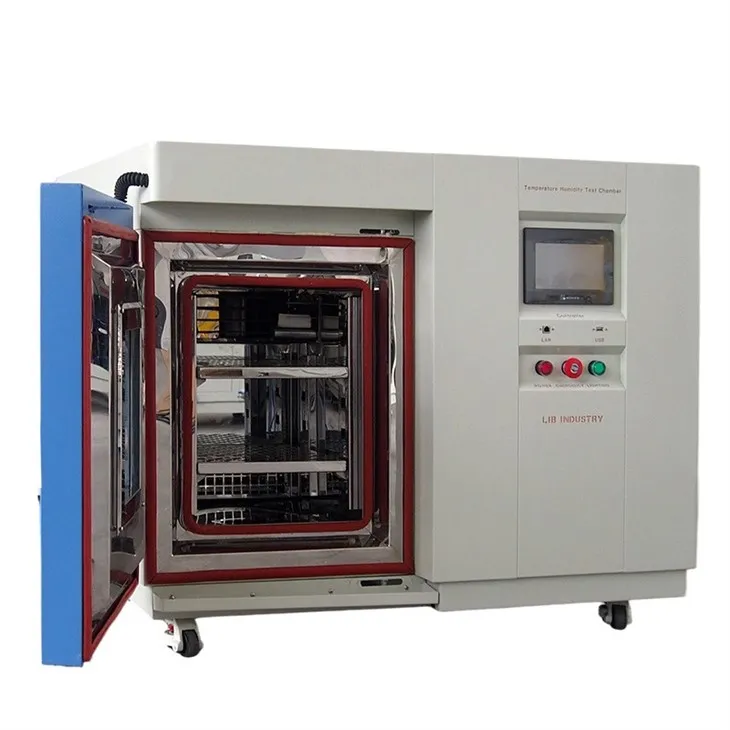
If you are interested in purchasing a mini temperature chamber for testing metal materials or other applications, we offer a range of high-quality products, including the Compact Constant Relative Humidity Environmental Chamber, Benchtop Temperature Humidity Chamber, and Table Top High-Precision Temperature Stability Test Chamber. Our products are designed to meet the needs of different laboratories and testing requirements. Please feel free to contact us for more information and to discuss your specific needs. We look forward to working with you to provide the best testing solutions for your metal materials.
References
- ASTM International. (2023). Standard test methods for mechanical testing of metals. ASTM.
- ASM International. (2023). Metals handbook: Properties and selection: Nonferrous alloys and special-purpose materials. ASM International.
- Callister, W. D., & Rethwisch, D. G. (2020). Materials science and engineering: An introduction. Wiley.


