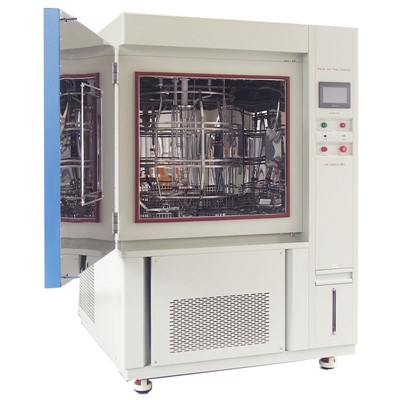


Can a Temperature Altitude Chamber be used in a high - humidity environment?
As a supplier of Temperature Altitude Chambers, I often receive inquiries from customers regarding the suitability of our chambers in various environmental conditions. One question that frequently arises is whether a Temperature Altitude Chamber can be used in a high - humidity environment. In this blog, I will delve into this topic, exploring the technical aspects, potential challenges, and solutions related to using our chambers in such conditions.
Understanding Temperature Altitude Chambers
Before we discuss the use of Temperature Altitude Chambers in high - humidity environments, it's essential to understand what these chambers are and how they function. A Temperature Altitude Chamber is a specialized piece of equipment designed to simulate different temperature and altitude conditions. It is widely used in industries such as aerospace, automotive, and electronics for testing the performance and reliability of products under extreme environmental conditions.
These chambers can create a wide range of temperature and pressure conditions, allowing manufacturers to test their products in environments that mimic real - world scenarios. For example, an aerospace company might use a Temperature Altitude Chamber to test the performance of an aircraft component at high altitudes where the temperature is extremely low and the air pressure is significantly reduced.
High - Humidity Environments: Characteristics and Challenges
High - humidity environments are characterized by a high amount of water vapor in the air. Humidity is typically measured as relative humidity (RH), which is the ratio of the amount of water vapor present in the air to the maximum amount of water vapor the air can hold at a given temperature. In high - humidity environments, the relative humidity can reach 80% or even higher.
When it comes to using a Temperature Altitude Chamber in a high - humidity environment, several challenges need to be considered. Firstly, the presence of water vapor can cause corrosion and damage to the internal components of the chamber. Metal parts, electrical circuits, and sensors are particularly vulnerable to corrosion in high - humidity conditions. This can lead to malfunctions, inaccurate readings, and a reduced lifespan of the chamber.
Secondly, high humidity can affect the performance of the temperature and pressure control systems in the chamber. Water vapor can condense on the surfaces of the chamber, which can interfere with the heat transfer process and make it more difficult to maintain the desired temperature and pressure conditions. This can result in inconsistent test results and affect the reliability of the testing process.
Technical Considerations for Using Temperature Altitude Chambers in High - Humidity Environments
Despite the challenges, it is possible to use a Temperature Altitude Chamber in a high - humidity environment with the right technical considerations and precautions. Here are some key factors to keep in mind:
Material Selection: When designing a Temperature Altitude Chamber for use in high - humidity environments, it is crucial to select materials that are resistant to corrosion. Stainless steel is a popular choice for the internal components of the chamber as it has excellent corrosion resistance properties. Additionally, using coatings and finishes that provide a protective barrier against moisture can further enhance the durability of the chamber.
Humidity Control: To prevent condensation and ensure accurate temperature and pressure control, it is essential to have a reliable humidity control system in place. This can include dehumidifiers, which remove excess moisture from the air inside the chamber, and humidity sensors, which monitor the humidity levels and adjust the dehumidification process accordingly.
Ventilation and Airflow: Proper ventilation and airflow are crucial for maintaining a stable environment inside the chamber. Good ventilation helps to remove moisture and prevent the buildup of condensation. The chamber should be designed with an efficient ventilation system that ensures a continuous flow of dry air.
Sealing and Insulation: To prevent the ingress of moisture from the external environment, the chamber should be well - sealed and insulated. This includes using high - quality gaskets and seals around the doors and access ports of the chamber. Insulation materials can also help to reduce heat transfer and prevent condensation on the external surfaces of the chamber.
Our Solutions: Chambers Designed for High - Humidity Environments
At our company, we understand the unique challenges of using Temperature Altitude Chambers in high - humidity environments. That's why we have developed a range of chambers that are specifically designed to withstand these conditions.
Our chambers are constructed using high - quality stainless steel materials that are resistant to corrosion. The internal components are coated with a protective finish to further enhance their durability. We also incorporate advanced humidity control systems that can accurately maintain the desired humidity levels inside the chamber.
In addition, our chambers feature a well - designed ventilation and airflow system that ensures a continuous supply of dry air. The chambers are also equipped with high - quality seals and insulation materials to prevent the ingress of moisture from the outside.
For customers who require more information about our products, we offer a variety of resources on our website. You can find detailed information about our Conditioning Chamber, which is designed to provide precise control of temperature, humidity, and other environmental factors. Our Cold Environmental Temperature Chamber For PCB Testing is specifically designed for testing printed circuit boards in cold and high - humidity conditions. And our Programmable Temperature And Climatic Test Chamber offers a wide range of programmable settings to simulate different environmental conditions.


Conclusion and Call to Action
In conclusion, while using a Temperature Altitude Chamber in a high - humidity environment presents several challenges, it is possible to overcome these challenges with the right technical solutions. Our company is committed to providing high - quality Temperature Altitude Chambers that are designed to perform reliably in high - humidity conditions.
If you are interested in purchasing a Temperature Altitude Chamber for use in a high - humidity environment, or if you have any questions about our products, please feel free to contact us. Our team of experts is available to provide you with detailed information, technical support, and assistance in selecting the right chamber for your specific needs. We look forward to the opportunity to work with you and help you achieve your testing goals.
References
- ASHRAE Handbook of Fundamentals. American Society of Heating, Refrigerating and Air - Conditioning Engineers.
- ISO 16750 - 4:2010 Road vehicles -- Environmental conditions and testing for electrical and electronic equipment -- Part 4: Climatic loads. International Organization for Standardization.
- ASTM D471 - 16 Standard Test Method for Rubber Property -- Effect of Liquids. American Society for Testing and Materials.