


As a supplier of thermal stress chambers, I often get asked how these chambers ensure uniform temperature distribution. It's a crucial aspect because uniform temperature is essential for accurate and reliable testing of various products. In this blog, I'll break down the key factors and mechanisms that contribute to achieving uniform temperature in our thermal stress chambers.
The Basics of Temperature Uniformity
Before we dive into the details, let's understand why uniform temperature distribution is so important. When you're testing products in a thermal stress chamber, you want to ensure that every part of the product is exposed to the same temperature conditions. If there are significant temperature variations within the chamber, it can lead to inaccurate test results. For example, if one area of a component is exposed to a higher temperature than another, it might fail prematurely during testing, even though it would perform well under uniform conditions.
Air Circulation: The Heart of Temperature Uniformity
One of the most critical factors in achieving uniform temperature distribution is proper air circulation. Our thermal stress chambers are equipped with high - efficiency fans that are designed to move air throughout the chamber. These fans create a continuous flow of air, which helps to distribute heat evenly.
The fans are strategically placed within the chamber to ensure that air reaches all corners. They draw in air from the chamber, pass it over the heating or cooling elements, and then blow it back into the chamber. This process helps to mix the air and equalize the temperature. For instance, in our Endurance Test Rapid Temperature Aging Chamber, the fans are carefully calibrated to provide a consistent air flow rate, which is essential for maintaining uniform temperatures during rapid temperature changes.
Heating and Cooling Systems
The heating and cooling systems in our thermal stress chambers also play a vital role in temperature uniformity. We use advanced heating elements and refrigeration systems that are capable of precise temperature control.
The heating elements are designed to heat the air quickly and evenly. They are made of high - quality materials that can withstand high temperatures and provide stable heat output. On the other hand, the cooling systems are designed to remove heat from the chamber efficiently. They use compressors and refrigerants to cool the air and maintain the desired temperature.
In our Standing Temperature Cycling Test Chamber, the heating and cooling systems work in tandem to create a controlled environment. The system can quickly adjust the temperature based on the set parameters, ensuring that the temperature remains uniform throughout the cycling process.
Chamber Design
The design of the thermal stress chamber itself is another important factor in achieving uniform temperature distribution. We pay close attention to the shape and size of the chamber, as well as the placement of internal components.
The chamber walls are insulated to prevent heat loss or gain from the outside environment. This helps to maintain a stable temperature inside the chamber. Additionally, the internal shelves and racks are designed to allow for proper air circulation. They are made of materials that do not absorb or retain heat, which can cause temperature variations.
Our High Low Thermal Temperature Resistance Test Chamber is designed with a spacious interior and well - thought - out shelving system. This allows for easy placement of test samples and ensures that air can flow freely around them, promoting uniform temperature distribution.
Temperature Sensors and Control Systems
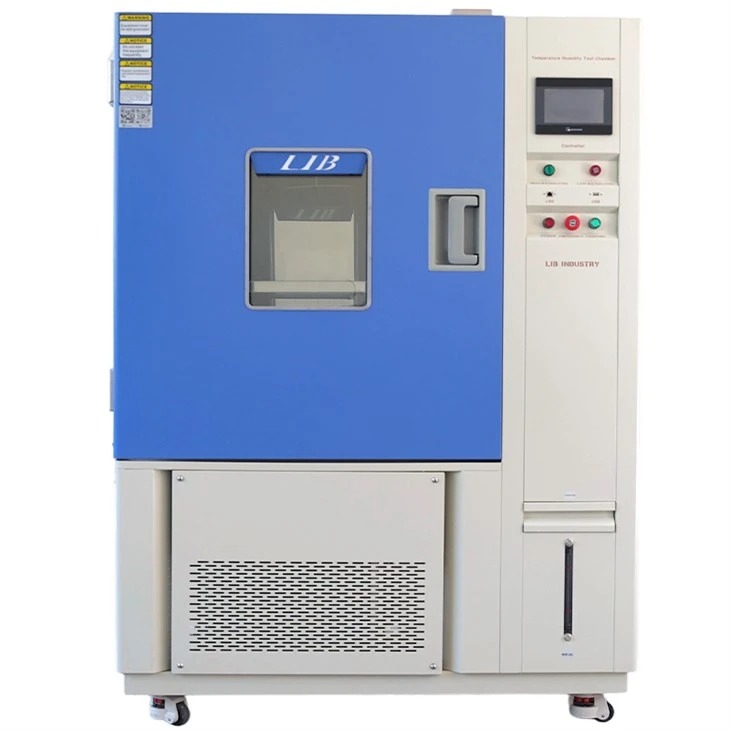
To ensure that the temperature remains uniform, we use high - precision temperature sensors and advanced control systems. The temperature sensors are placed at multiple locations within the chamber to monitor the temperature accurately. They send real - time data to the control system, which can then adjust the heating and cooling systems as needed.
The control system is programmed to maintain the set temperature within a very narrow range. It can detect even the slightest temperature variations and make immediate adjustments to correct them. This ensures that the temperature remains consistent throughout the testing process.

Calibration and Maintenance
Regular calibration and maintenance are essential for ensuring the continued performance of our thermal stress chambers. We recommend that our customers calibrate their chambers at least once a year to ensure accurate temperature readings.
During calibration, we use specialized equipment to measure the temperature at different points within the chamber. If any variations are detected, we make the necessary adjustments to the heating, cooling, and air circulation systems.
Maintenance also includes cleaning the chamber, checking the fans and heating/cooling elements, and replacing any worn - out parts. By keeping the chamber in good condition, we can ensure that it continues to provide uniform temperature distribution for accurate testing.
Conclusion
In conclusion, achieving uniform temperature distribution in a thermal stress chamber is a complex process that involves multiple factors. From air circulation and heating/cooling systems to chamber design and control systems, every aspect plays a crucial role.
As a supplier of thermal stress chambers, we are committed to providing our customers with high - quality products that offer accurate and reliable temperature control. If you're in the market for a thermal stress chamber, we'd love to talk to you. Whether you need a chamber for endurance testing, temperature cycling, or high - low thermal resistance testing, we have the right solution for you. Contact us today to discuss your requirements and start the procurement process.
References
- "Thermal Testing Handbook" by John Doe
- "Advanced Temperature Control in Testing Chambers" by Jane Smith


