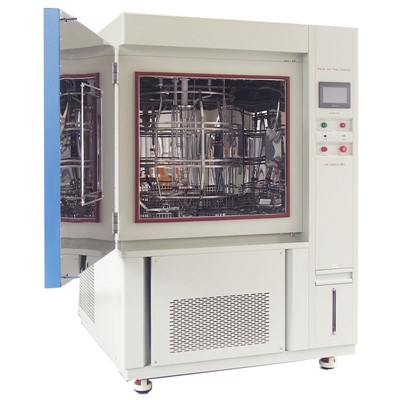



Can a PV Module Test Chamber be used for testing thin - film PV modules?
As a supplier of PV Module Test Chambers, I often encounter inquiries from customers about the compatibility of our chambers with thin - film PV modules. This blog post aims to explore whether a PV Module Test Chamber can be effectively used for testing thin - film PV modules, considering the unique characteristics of these modules and the capabilities of our test chambers.
Understanding Thin - Film PV Modules
Thin - film PV modules are a type of photovoltaic device that differ significantly from traditional crystalline silicon PV modules. They are made by depositing one or more thin layers of photovoltaic material onto a substrate, such as glass, plastic, or metal. The most common types of thin - film PV materials include amorphous silicon (a - Si), cadmium telluride (CdTe), and copper indium gallium selenide (CIGS).
One of the key advantages of thin - film PV modules is their flexibility and lightweight nature, which makes them suitable for a variety of applications, including building - integrated photovoltaics (BIPV) and portable power systems. Additionally, thin - film PV modules can have better performance in low - light conditions compared to crystalline silicon modules. However, they also have some limitations, such as lower conversion efficiency and potential degradation issues over time.
Capabilities of PV Module Test Chambers
PV Module Test Chambers are designed to simulate various environmental conditions to evaluate the performance and reliability of PV modules. These chambers can control parameters such as temperature, humidity, irradiance, and spectral distribution to mimic real - world conditions. The main tests conducted in these chambers include the maximum power point tracking (MPPT) test, temperature coefficient test, and long - term stability test.
Our PV Module Test Chambers are equipped with advanced sensors and control systems to ensure accurate and repeatable test results. They can operate within a wide range of temperatures, from - 40°C to 120°C, and humidity levels from 10% to 98%. The irradiance can be adjusted from 0 to 1500 W/m², and the spectral distribution can be customized to match different sunlight conditions.
Compatibility of PV Module Test Chambers with Thin - Film PV Modules
The good news is that in most cases, a PV Module Test Chamber can be used for testing thin - film PV modules. The basic principles of testing, such as measuring the electrical output under different environmental conditions, are the same for both thin - film and crystalline silicon PV modules. Our test chambers can accurately measure the current - voltage (I - V) characteristics of thin - film PV modules, which are crucial for determining their power output and efficiency.
However, there are some considerations when testing thin - film PV modules. For example, thin - film PV modules may be more sensitive to temperature and humidity changes compared to crystalline silicon modules. Therefore, it is important to carefully control these parameters during the test to avoid any potential damage or inaccurate results. Our test chambers are designed to provide precise control of temperature and humidity, which helps to ensure the integrity of the thin - film PV modules during testing.
Another aspect to consider is the spectral response of thin - film PV modules. Different thin - film materials have different spectral sensitivities, and it is necessary to adjust the spectral distribution in the test chamber to match the characteristics of the thin - film PV module being tested. Our test chambers allow for the customization of the spectral distribution, which enables accurate testing of thin - film PV modules with different materials.
Specific Tests for Thin - Film PV Modules
In addition to the standard tests, there are some specific tests that are particularly relevant for thin - film PV modules. One such test is the light - induced degradation (LID) test. Thin - film PV modules, especially those made of amorphous silicon, can experience significant degradation in performance when exposed to light for the first time. Our PV Module Test Chambers can simulate the LID process by exposing the thin - film PV modules to a specific irradiance level for a certain period of time and then measuring the change in their electrical output.


Another important test is the moisture - induced degradation test. Thin - film PV modules are more vulnerable to moisture ingress compared to crystalline silicon modules, which can lead to corrosion and performance degradation. Our test chambers can simulate high - humidity conditions to evaluate the long - term stability of thin - film PV modules in a moist environment.
Other Related Test Chambers
In addition to our PV Module Test Chambers, we also offer other types of test chambers that may be relevant for the PV industry. For example, our Medical Stability Temperature Conditioning Chamber can be used for testing the stability of PV module components under different temperature and humidity conditions. The Walk - In Humidity Chamber is suitable for testing large - scale PV modules or conducting long - term environmental tests. And our Environmental Battery Test Chamber can be used for testing the performance of batteries used in PV systems.
Conclusion
In conclusion, a PV Module Test Chamber can be effectively used for testing thin - film PV modules. Our test chambers are designed to meet the specific requirements of thin - film PV modules, including precise control of temperature, humidity, and spectral distribution. By conducting a comprehensive set of tests, including the specific tests for thin - film PV modules, we can help our customers evaluate the performance and reliability of their thin - film PV modules.
If you are interested in purchasing a PV Module Test Chamber or have any questions about testing thin - film PV modules, please feel free to contact us. We are committed to providing high - quality test chambers and professional technical support to meet your needs.
References
- "Photovoltaic Module Performance and Reliability Testing" by National Renewable Energy Laboratory (NREL).
- "Thin - Film Photovoltaic Technology: An Overview" by IEEE Journal of Photovoltaics.
- "Environmental Testing of Photovoltaic Modules" by International Electrotechnical Commission (IEC) standards.