


Introduction
From desert installations to coastal industries, electronic products face a spectrum of environmental stressors that challenge their reliability and lifespan. To simulate these conditions in a repeatable and standardized way, the IEC 60068-2 series defines rigorous environmental test methods for both particulate intrusion and corrosive gas exposure.
In this article, we'll unpack the key IEC 60068-2 test methods related to dust, sand, and noxious gases, explain why each matters in real-world deployments, and show how LIB's specialized test chambers make it easy to comply-while delivering reliable, repeatable data.
Part 1: Dust and Sand Testing – Why It Matters
Real-World Risk: Dust Is Everywhere
Fine dust and sand are ubiquitous in outdoor and semi-outdoor environments-from base stations in desert climates to smart sensors in roadside cabinets. Dust infiltration can:
Abrade mechanical parts and sensitive optics
Compromise IP-rated enclosures
Lead to overheating or contact failure in electronics
Standard in Focus: IEC 60068-2-68 (Test L)
This standard simulates airborne particulates under different motion and pressure conditions:
La – Settling Dust: Fine dust suspended in still air, settling on test items
Lb – Free-Falling Dust: Simulated intermittent or light dust exposure
Lc – Blown Sand: High-velocity sand impacting surfaces, mimicking desert winds
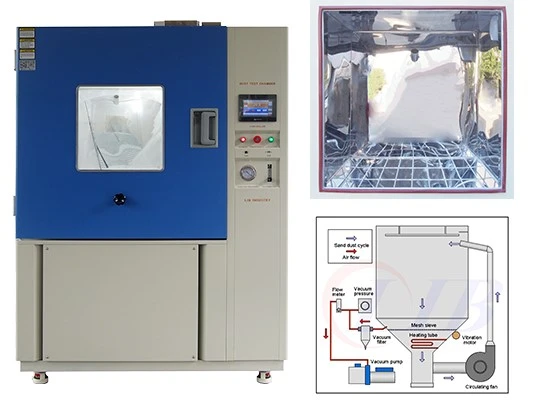
Test Solution: LIB Dust-Proof Test Chamber
|
Product |
|
|
Standard |
IEC 60068-2-68 (La/Lb/Lc) |
|
Features: |
High-durability SUS304 stainless-steel workroom type vertical dust circulation system Screening equipment and dust drying system |
|
Applications: |
Outdoor sensors, junction boxes, automotive modules |
|
|
|
Part 2: Corrosive Gas Testing – Why It Matters
The Silent Enemy: Atmospheric Gases
Even at low concentrations, industrial gases like SO₂, H₂S, Cl₂, and NO₂ can initiate corrosion on metal surfaces, degrading electronics over time. Affected components include:
PCBs and connectors
Relay contacts and wire terminations
Solder joints and housing materials
IEC 60068-2 Corrosion Standards Overview
|
Test Code |
Focus |
Key Parameters |
|
60068-2-42 (Kc) |
SO₂ corrosion |
SO₂ exposure, 100% RH at 40 °C |
|
60068-2-43 (Kd) |
H₂S corrosion |
H₂S cycling + humidity |
|
60068-2-60 (Ke) |
Mixed gases |
SO₂, H₂S, Cl₂, NO₂ with T/RH cycling |
Targeted Solutions from LIB
|
Products |
|||
|
Standard |
IEC 60068-2-42 |
IEC 60068-2-43 |
IEC 60068-2-60 |
|
Features: |
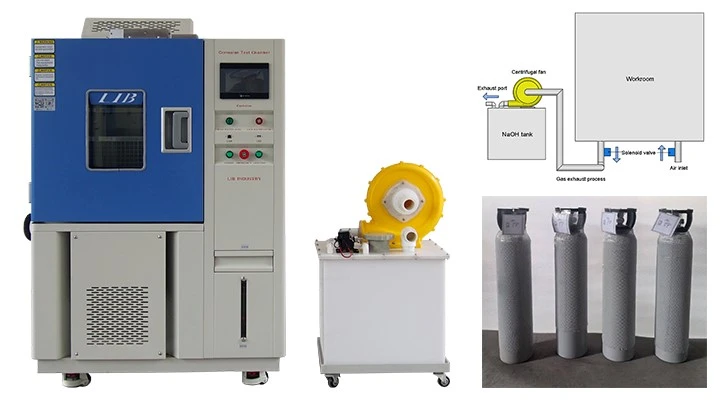
Controlled SO₂ injection system |
Automated H₂S dosing |
Programmable multi-gas flow system (SO₂, H₂S, Cl₂, NO₂) |
|
Ideal for |
Contacts, connectors, electro-mechanical switches |
Marine electronics, wastewater equipment, industrial sensors |
Circuit boards, housing enclosures, military-grade electronics |
|
|
|||
Why LIB? Turn Standards Into Assurance
LIB makes compliance easy by offering chambers purpose-built for each IEC 60068-2 method. Whether you're simulating desert storms or corrosive urban atmospheres, LIB chambers deliver:
Precise environmental control
Long-term durability for repeated testing cycles
Easy setup with programmable test profiles
Comprehensive after-sales policy: 3-year warranty, lifetime service, ensuring that your test has no worries after purchase.
Conclusion
Environmental stress testing is more than a checkbox-it's a safeguard for product quality and operational longevity. Whether you're validating IP ratings or corrosion resistance, IEC 60068-2 tests are essential tools for modern engineering.
With LIB's modular chamber solutions, your lab can confidently execute these tests with speed, precision, and full standard compliance. Partner with LIB-because environmental testing should be as reliable as the products you build.Leave your testing requirements and LIB will respond to your request within 24 hours.


