


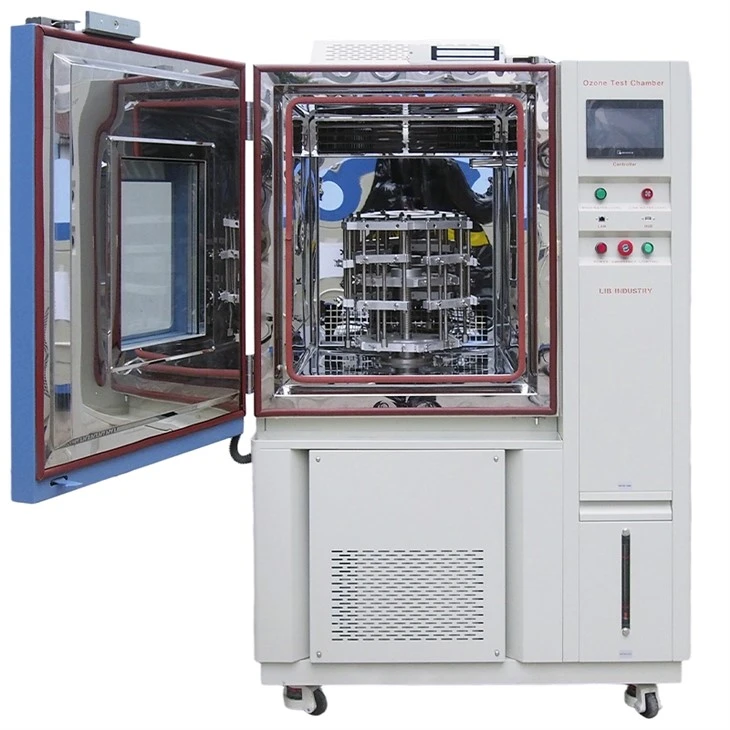
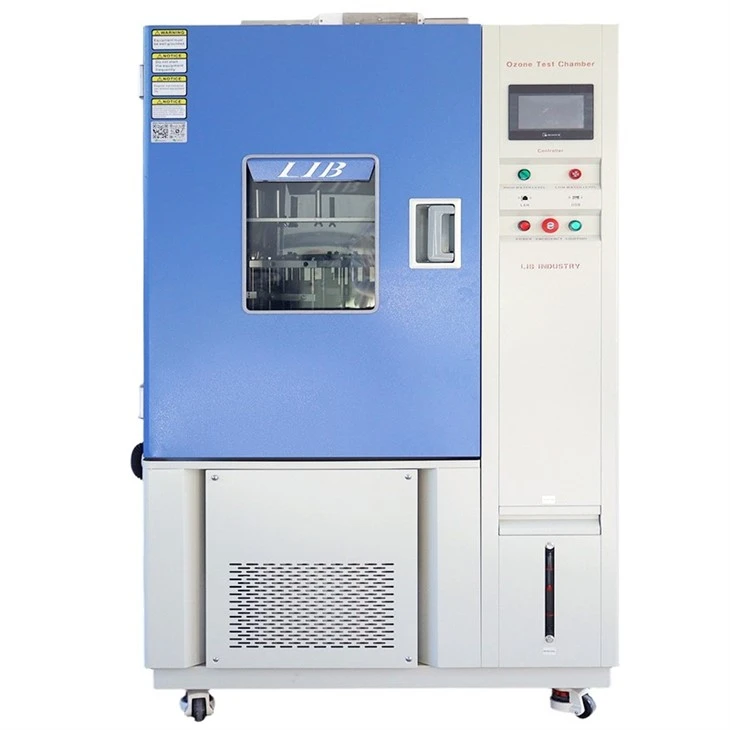
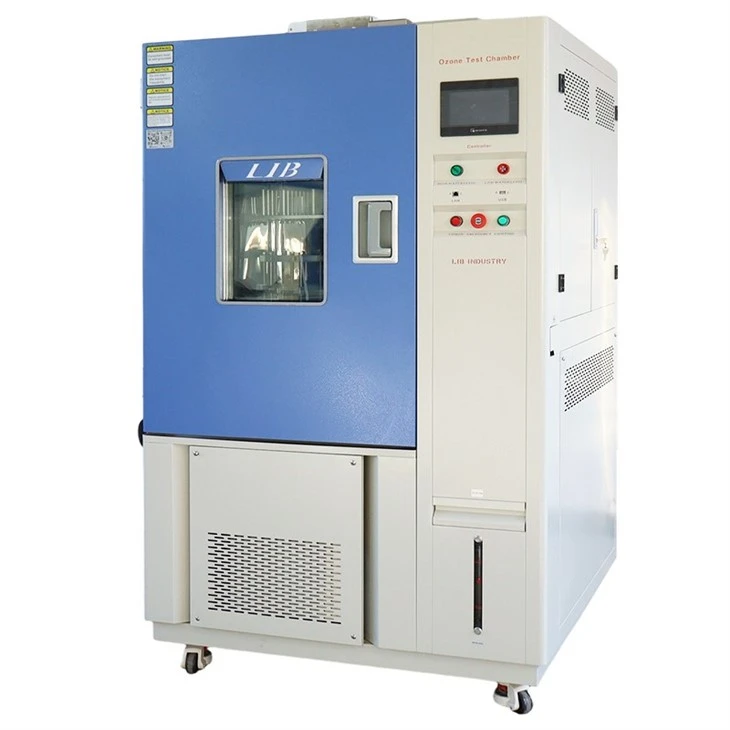

By simulating controlled ozone-rich environments, this device ensures early detection of cracking, surface degradation, and material embrittlement. With precise ozone concentration control, temperature regulation, and real-time monitoring, the device allows manufacturers to validate rubber durability before deployment in automotive, aerospace, industrial, and consumer applications.
As a leading manufacturer of environmental testing equipment, LIB industry offers multiple standard models of ozone testing devices with customizable options, including chamber dimensions, ozone concentration levels, temperature ranges, and control systems. It delivers reliable, repeatable, and safe ozone aging tests for all types of rubber, including natural, synthetic, and blended compounds.
Why Test Rubber for Ozone Deterioration?
Testing rubber under controlled ozone exposure is critical for product longevity and safety. Ozone can cause:
Surface cracking and micro-fissures – Rubber compounds can develop ozone cracks even at low stress levels, compromising sealing and insulation.
Material embrittlement – Prolonged ozone exposure accelerates aging, reducing elasticity and tensile strength.
Loss of mechanical integrity – Critical components like O-rings, gaskets, and seals may fail, risking leaks or equipment malfunction.
Premature product failure in extreme environments – Automotive tires, hoses, and industrial belts are highly vulnerable to ozone-induced deterioration.
By using an ozone testing device, manufacturers can identify weak rubber formulations, optimize compound additives, and improve product reliability in ozone-prone environments.
Key Advantages of the Ozone Testing Device for Rubber Deterioration
Precise Ozone Generation and Control
Adjustable ozone concentration from 0.1 to 200 pphm with ±2% accuracy. Ensures uniform exposure across all rubber samples for reliable aging tests.
Stable Temperature and Humidity Control
Chamber temperature range 0°C to +100°C with ±0.5°C fluctuation. Relative humidity adjustable from 30%–98% RH, maintaining consistent test conditions per ISO 1431-1.
High-Uniformity Airflow System
Optimized internal air circulation guarantees even ozone distribution and avoids local hotspots, critical for multi-sample or large rubber strips testing.
Programmable Multi-Step Test Profiles
Advanced touchscreen controller allows up to 99-step test programs, real-time data logging, and automatic reporting for compliance and traceability.
Static & Dynamic Test Configurations
Supports static (unstressed) specimen exposure and dynamic tensile strain testing up to 35% elongation. This reflects real-world deformation for automotive seals, tire sidewalls, and high-flex elasticity components.
Safe Exhaust & Door Lock
Activated-carbon filter treats ozone before release, while an electromagnetic lock prevents opening until safe, ensuring operator protection.
What Are the Technical Specifications You Need to Know?
|
Model |
OC-250 |
OC-500 |
OC-800 | OC-1000 |
|
Internal Dimension (mm) |
600*600*700 |
700*800*900 |
800*1000*1000 |
1000*1000*1000 |
|
Overall Dimension (mm) |
960*1150*1860 |
1200*1340*2020 |
1300*1540*2120 |
1500*1540*2140 |
|
Interior Volume |
250L |
500L |
800L | 1000L |
|
Temperature Range |
-120℃ ~ +150 ℃ |
|||
|
Temperature Fluctuation |
± 0.5 ℃ |
|||
|
Temperature Deviation |
± 2.0 ℃ |
|||
|
Cooling Rate |
Ambient ~ 0℃ within 20 min |
|||
Humidity Range |
30% ~ 98% RH |
|||
| Humidity Deviation | ± 2.5% RH | |||
Ozone Concentration |
1~1000PPHM |
|||
Sample Holder Rotate Speed |
0~10 r/min |
|||
Airflow Rate |
0 ~ 60L/min |
|||
Clamps Tensile Stretch |
5%~35% |
|||
Cooling system |
Mechanical compression refrigeration system;French TECUMSEH compressor |
|||
| Controller |
Programmable color LCD touch screen controller. Ethernet connection, PC Link |
|||
Water supply system |
Automatic water supply,Water purification system |
|||
Temperature Sensor |
PTR Platinum Resistance PT100Ω/MV A-class |
|||
Gas Sensor |
Ozone gas sensor |
|||
Ozone Generator |
Silent discharge type ozone generator |
|||
Air Circulation |
Centrifugal wind fan |
|||
Sample Holder |
Static + dynamic combined sample holder |
|||
Interior Material |
SUS304 stainless steel |
|||
| Observation Window | Interior lighting, double-layer thermo stability silicone rubber sealing | |||
Highlights of Ozone Testing Device for Rubber Deterioration
Internal Chamber – SUS304 Stainless Steel
Material & Sealing: Corrosion-resistant stainless steel combined with silicone gaskets to maintain airtight conditions.
Observation & Safety: Tempered glass window for continuous monitoring; electromagnetic door lock prevents misoperation.
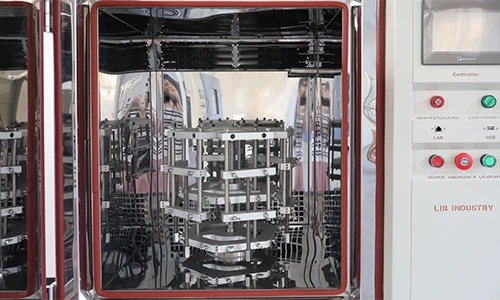
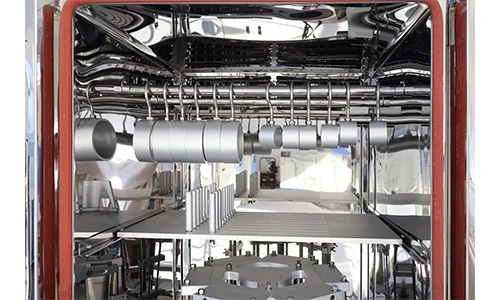
Sample Rack
Combined Test Capability: Supports both static and dynamic testing, allowing stretched samples to be evenly exposed to controlled ozone conditions.
Customizable Options: Additional racks can be configured, including circular sample holders and flexible hose-mounted racks to accommodate diverse specimen types.
Rotation Function: Sample holder can rotate 360° at a controlled speed of 20–25 mm/s, ensuring uniform ozone exposure across all surfaces.
Tensile Stretching: Clamps allow adjustable tensile strain from 5% to 35%, simulating realistic operational stress on elastomeric materials.
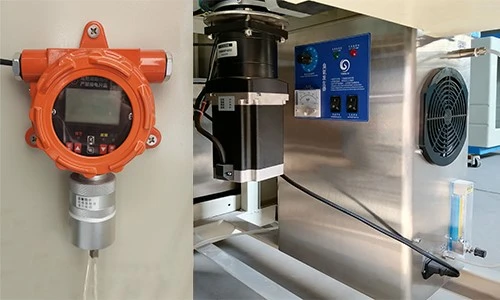
Ozone Generator & Sensor
Generator: Corona discharge ozone generator, producing 1–1000 pphm with stable output.
Sensor: UV photometric ozone detector, ±2% measurement accuracy, providing real-time feedback to maintain target concentrations.
Standards Compliance: Designed for ISO 1431, ASTM D1149, GB/T 7762 test protocols.
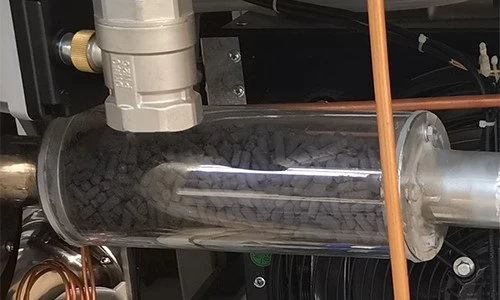
Ozone Exhaust System
Filtration: Activated-carbon adsorption to remove residual ozone before discharge.
Safety & Efficiency: Protects operators and laboratory environment; airflow designed to maintain uniform ventilation without disrupting chamber conditions.
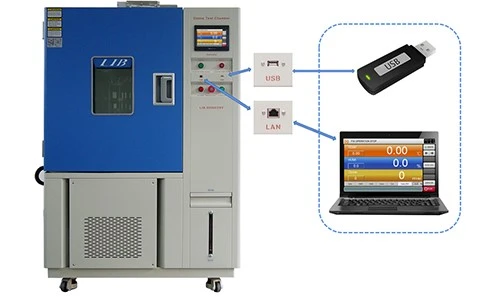
Controller
Environmental Control: Digital interface for temperature, humidity, ozone concentration, and test duration.
Programmable Operation: Supports continuous operation with automated cycles.
Data Logging & Alarms: Captures test data in real time; provides alarms for deviations or unsafe conditions.
User Convenience: USB export and optional multi-language interface for reporting and documentation.
Ozone Testing Device Insights: FAQs for Rubber Aging & Durability
Q1: How does the testing chamber simulate ozone conditions?
Q2: What are the site requirements for the equipment?
Q3: Can the ozone concentration range be customized?
Ensure Rubber Reliability Today
Protect your rubber components from premature ozone deterioration. Contact LIB industry today at sales@libtestchamber.com to discuss your ozone testing requirements, receive a tailored solution, and get a quotation within 1–3 hours.
Fast Delivery | Custom Configurations | 3-Year Warranty | Lifetime Support
Send us your test plan now and get a free evaluation & recommendation for your rubber durability testing.
Hot Tags: ozone testing device for rubber deterioration, ozone testing device for rubber deterioration manufacturers, suppliers, factory, Ozone Climatic Chamber, Corrosion Noxious Gas Test Chamber, Rubber Ozone Aging Test Chamber, SO2 Corrosion Test Chamber, Mixed Gas Corrosion Chamber, noxious gas chamber


