


In the meticulous world of jewelry manufacturing, quality assurance is paramount. A single piece must withstand a symphony of environmental assaults-from skin perspiration and urban pollution to sunlight and saline moisture. Traditionally, replicating these conditions required a battery of separate test chambers, consuming valuable lab space, time, and resources.
A forward-thinking jewelry innovator recently presented us with a compelling challenge: to integrate the full spectrum of tests into a single, automated system. While a universal "do-it-all" chamber that runs all tests *simultaneously* remains a physical impossibility due to cross-contamination, LIB's engineering expertise proves that intelligent consolidation is not only possible but highly advantageous. By combining compatible environments into a unified platform with switchable modules, we can create a seamless, efficient, and space-saving testing workflow.
The Art of the Possible: Strategic Integration of Test Environments
The key to a successful multi-environment chamber is understanding which tests can share a platform and which require dedicated, isolated modules. LIB's approach is one of strategic integration:
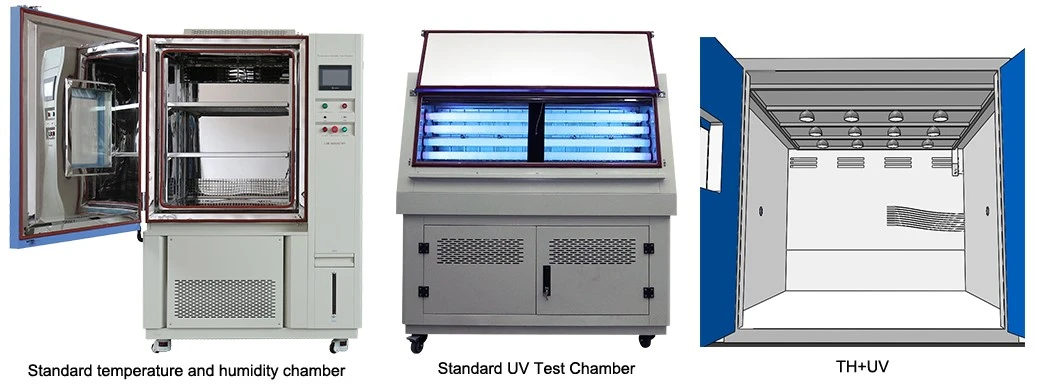
1. Perfect Partners: Combined UV & Temperature/Humidity Aging
The most logical and powerful integration combines UV weathering (ISO 4892-2) with precise temperature and humidity control. This creates a world-class weathering chamber that can simulate everything from desert sun to tropical rainfall.
Standard equipment recommendations:
Temperature Humidity Environmental Chamber,UV Weathering Test Chamber
How it works: A robust climatic chamber serves as the foundation. An array of UV-A/UV-B lamps is integrated into the chamber, along with a condensation or spray system.
Benefits: This combination allows for complex, realistic test cycles like:
- 8 hours of UV exposure at 50°C.
- 4 hours of condensation at 40°C and 100% RH.
This is a single, programmable cycle within one chamber, eliminating manual sample transfer and saving significant time.
2. The Corrosion Cluster: Sequential Salt Spray & Humidity Cycling
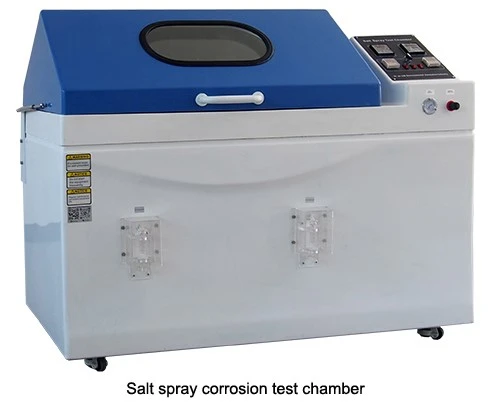
While salt spray cannot be applied simultaneously with other tests, a chamber can be designed to run corrosive cycles in a precise, automated sequence with humidity recovery phases.
Standard equipment recommendations:
How it works: A slide-in, slide-out salt spray module is installed within the main climatic chamber. The system runs a "Corrosion Cycle":
- Phase 1 (Salt Spray): The module engages, spraying a salt fog for a set duration.
- Phase 2 (Dry-Off): The module retracts. The chamber's heating and air circulation systems activate to dry the samples.
- Phase 3 (Humidity Recovery): The chamber converts to high-humidity mode, creating a moist environment that accelerates the corrosion process.
This entire cyclic corrosion test runs automatically without operator intervention.
3. The Isolated Specialists: Gas Tests and Immersion
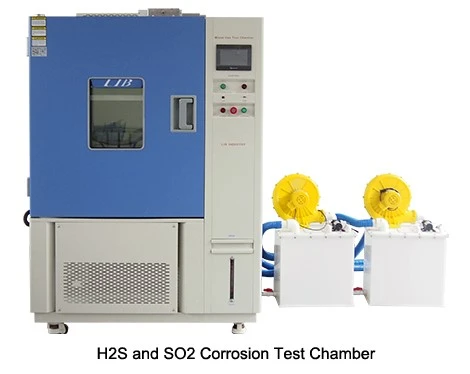
Certain tests are too aggressive to share an environment with others and are best handled as self-contained modules.
Standard equipment recommendations:
SO2 Corrosion Test Chamber ,H₂S Corrosive Gas Test Chamber
Sulfide (H₂S/SO₂) Testing (ASTM B809): This requires a hermetically sealed inner chamber within the main cabinet. This gas-tight liner, often with a PTFE coating, prevents highly corrosive gases from damaging the main chamber's sensors and structure. It is a chamber-within-a-chamber solution.
Immersion Tests: A system of external reservoirs (for artificial sweat, high/low TDS water) and internal spray nozzles or immersion baskets can be added. The chamber's humidity function can create a saturated environment for vapor exposure, while the spray/immersion system handles liquid contact.
LIB's Custom Multi-Environment Chamber: Technical Specifications
Our solution is a master controller orchestrating a suite of specialized modules.
|
Core Climatic Platform |
Specification |
|
Temperature Range |
+10°C to +80°C |
|
Humidity Range |
20% to 98% RH |
|
Control Stability |
±0.3°C / ±2.0% RH |
|
Inner Material |
316L Stainless Steel (Standard) |
|
Standard Volume |
150L, 270L, 400L (Customizable) |
|
Integrated Modules |
Capabilities |
|
UV Weathering Module |
UV-A (340nm) or UV-B (313nm) Lamps, Irradiance Control, Condensation/Spray |
|
Salt Spray Module |
NSS, AASS, CASS Tests, Programmable Cycle Timing, CCTS Air Saturator |
|
Sulfide Test Module |
H₂S or SO₂ gas, 0.1 - 50 ppm concentration, Sealed PTFE Liner, Carbon Scrubber |
|
Immersion/Spray System |
Multiple solution tanks, Programmable spray/soak cycles |
Comparison: Disparate Chambers vs. LIB's Unified System
|
Aspect |
Traditional Separate Chambers |
LIB's Custom Integrated Chamber |
|
Footprint |
Requires space for 3-4 large units. |
One compact unit saves over 60% floor space. |
|
Workflow Efficiency |
Manual, slow, prone to human error. Sample transfer between labs. |
Fully automated. Program once and run complex sequences unattended. |
|
Data Integrity |
Data from different machines must be correlated. |
Unified data logging. One timestamp for all environmental stresses. |
|
Total Cost of Ownership |
High upfront capital + high operational (maintenance, utilities, labor). |
Higher initial investment, but lower long-term cost due to efficiency gains. |
|
Testing Realism |
Tests are isolated and unnatural. |
More realistic. Simulates real-world sequential exposure (e.g., sun -> rain -> sweat). |
Frequently Asked Questions (FAQ)
Q: Can I run a salt spray test and a UV test at the exact same time?
A: No. Physically spraying a salt mist while exposing samples to UV light is not feasible and would contaminate the UV lamps and the main chamber. The power of our system is automated sequential testing, which is actually more reflective of real-world conditions (e.g., exposure to saline air during the day followed by UV sunlight).
Q: How does the system prevent corrosion from the salt spray module?
A: The salt spray module is a self-contained, corrosion-resistant unit that can be easily removed for thorough cleaning and maintenance after a test cycle. This protects the pristine condition of the main climatic chamber.
Q: Is calibration and technical support available in our region?
A: Absolutely. LIB has a global service network, with certified technicians and partners in key regions. We provide installation, initial calibration, training, and ongoing maintenance support to ensure your chamber operates to specification year after year.
Embrace the Future of Integrated Testing
Why choose between comprehensive testing and operational efficiency when you can have both? LIB's custom multi-environment chambers represent the next evolution in jewelry quality assurance.
Contact us today to schedule a consultation with our engineering team. Let's discuss your specific testing standards and build a tailored solution that streamlines your process, ensures compliance, and protects the integrity of your brand.


