


In electric vehicle (EV) and lithium battery safety validation, high-temperature, high-humidity, and thermal-cycling tests are critical for assessing thermal risks, material durability, and system integrity. Four key standards-UL 2580, SAE J2464, IEC 60086-4, and UL 1642-define environmental stress procedures to ensure that cells, modules, and packs can withstand real-world extremes without safety compromise.
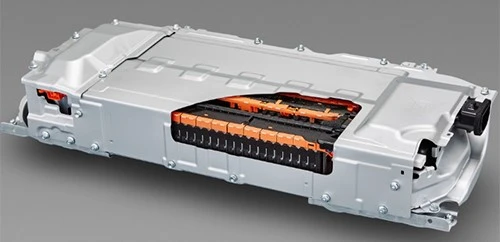
This article distills the relevant requirements from these standards, translates them into actionable test profiles, and maps each to suitable LIB temperature and humidity environmental chamber and environmental battery test chamber solutions.
1. UL 2580 - Safety for Lithium-Ion Batteries in Electric Vehicles
Focus: Covers electrical, mechanical, thermal, and environmental safety for EV battery systems. Environmental stress tests evaluate system performance after exposure to high/low temperature, humidity, and thermal cycling.
Relevant Environmental Aspects:
- Temperature & Humidity Exposure - Applied before insulation resistance and dielectric strength testing.
- External Short Circuit Test - Conducted at approximately 20 mΩ loop resistance until battery discharge or up to 7 h.
- Post-Humidity Electrical Tests - Insulation and hi-pot checks to detect moisture-induced degradation.
Engineering Note: Although 85 °C / 85 %RH is not mandated in the UL 2580 text, it is widely adopted as an industry stress profile for reliability margin testing.
2. SAE J2464 - Electric Vehicle Battery Abuse Testing Guidelines
Focus: Outlines abuse and safety tests for EV batteries, including thermal shock and thermal cycling under extreme conditions.
Typical Thermal Cycling Profile:
Temperature Range: –40 °C ↔ +70 °C
Transfer Time: ≤ 15 min between extremes
Dwell Time: 30–60 min at each temperature
State of Charge: High SOC for maximum risk exposure
3. IEC 60086-4 - Safety of Primary Lithium Batteries
Focus: Specifies safety requirements for primary lithium cells, including Thermal Cycling (Test B).
Thermal Cycling Requirements:
- Alternating high/low temperature zones
- Specified dwell times and number of cycles per standard clause
- Evaluation for leakage, deformation, or performance degradation
4. UL 1642 - Safety of Lithium Cells
Focus: Covers heating and temperature-cycling tests to simulate thermal abuse on lithium cells.
Heating Test Example:
Temperature ramp: 5 ± 2 °C/min
Target temperature: 130 ± 2 °C
Hold time: 10 min
Acceptance: No fire, rupture, or explosion
Translating Standards into Practical Test Procedures
|
Standard |
Typical Environmental Profile |
Purpose |
|
UL 2580 |
85 °C / 85 %RH (engineering practice); external short circuit; insulation test post-humidity |
Reliability + dielectric robustness |
|
SAE J2464 |
–40 °C ↔ +70 °C; ≤15 min transfer; high SOC |
Thermal shock/failure mode detection |
|
IEC 60086-4 |
High/low temp alternation per clause |
Seal & material integrity |
|
UL 1642 |
~5 °C/min → 130 °C hold 10 min |
Thermal abuse tolerance |
LIB Chamber Solutions for Standard Compliance
LIB Temperature & Humidity Environmental Chamber
|
Range |
Temperature:–70 / –40 / –20 °C → +150 °C Humidity: 20–98 %RH |
|
Stability |
±0.5 °C temperature fluctuation, ±2.5 %RH humidity deviation |
|
Control |
Programmable color LCD, Ethernet remote control |
|
|
|
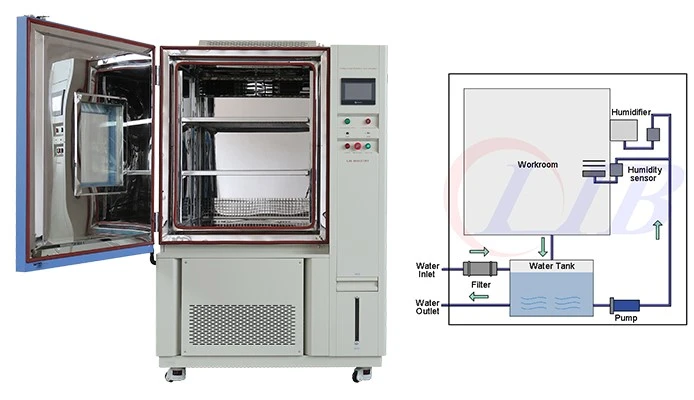
Applications:
- UL 2580 humidity exposure (85 °C/85 %RH)
- SAE J2464 –40 °C ↔ +70 °C cycling
- IEC 60086-4 thermal cycling sequences
LIB Environmental Battery Test Chamber
Battery-Focused Design: Optional explosion-proof, fire suppression, and pressure relief packages
Safety Systems: Smoke and gas detection, emergency shutoff
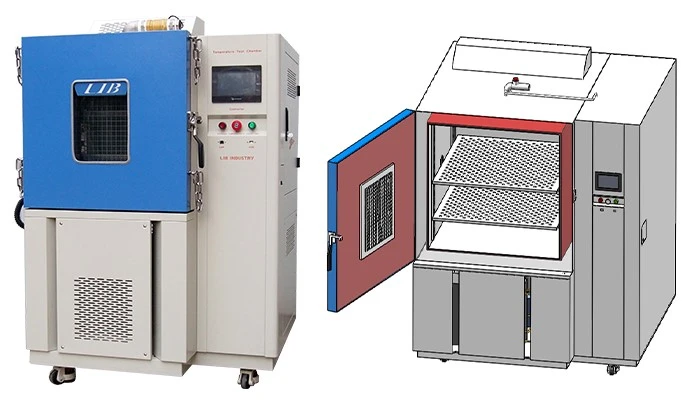
Applications:
- UL 2580 battery pack testing with post-humidity electrical evaluation
- UL 1642 heating test profiles
- High-risk cycling with safety containment
Implementation Checklist
1. Define Test Item: Cell, module, or pack; SOC; monitoring points (T, V, I, smoke/gas).
2. Set Test Program:
UL 2580: Humidity + insulation check
SAE J2464: Thermal shock profile with ≤15 min transfer
IEC 60086-4: Clause-specific cycling
UL 1642: Heating to 130 °C with controlled ramp
3. Match Equipment: Chamber volume & power vs. load mass; safety options for batteries.
4. Record & Report: Full temperature/humidity curve, transfer times, dwell stability, and pass/fail criteria.
Conclusion
High-temperature, high-humidity, and thermal cycling are core to evaluating the safety and reliability of lithium battery systems. By aligning test parameters from UL 2580, SAE J2464, IEC 60086-4, and UL 1642 with the capabilities of LIB Temperature & Humidity Environmental Chambers and LIB Environmental Battery Test Chambers, manufacturers can execute compliant, repeatable, and safe validation programs-while retaining flexibility for engineering margin tests.


