


In today's automotive industry, ensuring electronic components withstand extreme environmental conditions is crucial. Vehicles encounter heavy rain, high-pressure cleaning, road spray, and even snow or ice accumulation, all of which can affect safety and performance.
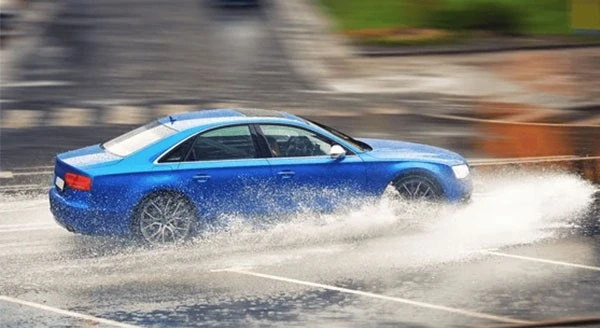
To prepare for these challenges, automotive manufacturers rely on IPX6K9K test chambers advanced laboratory systems designed to replicate high-pressure water and high-temperature scenarios in a controlled environment, allowing engineers to evaluate component durability before real-world deployment.
Understanding IPX6K9K Standards
The IPX6K9K standard (IEC 60529 + ISO 20653) defines two essential levels of water protection that simulate real-world stresses for automotive components:
|
Protection Level |
Key Features |
Pressure |
Temperature |
|
IPX6K |
Resists high-pressure water jets |
1000 kPa |
Ambient |
|
IPX9K |
Resists high-pressure, high-temperature water jets |
10000 kPa |
Up to 80°C |
These standards are critical in automotive, electronics, and lighting industries to ensure components perform reliably under harsh conditions, reducing the risk of failures and warranty claims. Adhering to these standards not only improves safety but also builds consumer confidence in vehicle reliability.
Automotive Applications
Automotive electronics-including engine control modules, sensors, lighting systems, and infotainment components-must perform flawlessly in rain, snow, or during vehicle washes. Components such as front headlights, rear lights, and sensors are particularly vulnerable because they are constantly exposed to the elements.
Case Study: Front Headlight Module Testing
Objective: Validate the front headlight module against high-pressure water and heat exposure to ensure it meets IPX6K9K standards.
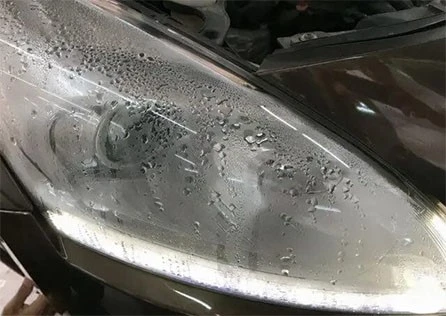
Testing Process:
Mounting: The headlight module is securely installed inside the LIB IPX6K9K Test Chamber, with all connectors attached as they would be in the vehicle.
IPX6K Phase: Water jets at 1000 kPa are applied from multiple angles (0°, 30°, 60°, 90°) for 30 seconds each, simulating heavy rain and road splash conditions.
IPX9K Phase: High-pressure water at 10000 kPa and 80°C is applied, replicating extreme cleaning scenarios such as high-pressure car washes.
Evaluation: Engineers inspect the module for any water ingress, check electrical connections, and test light output and uniformity.
Outcome: The module successfully withstands both phases, confirming its durability and reliability under simulated real-world conditions, giving manufacturers confidence before installation in vehicles.
LIB IPX6K9K Test Chamber Features
The LIB IPX6K9K Test Chamber is engineered to meet ISO 20653 and IEC 60529 standards, providing a controlled, repeatable, and reliable testing environment.
|
Key Feature |
Description |
|
Dual Testing Modes |
Supports both IPX6K and IPX9K for comprehensive testing. |
|
High-Pressure Simulation |
IPX6K mode reaches up to 1000 kPa; IPX9K mode reaches up to 10000 kPa at 80°C. |
|
Multi-Angle Nozzles |
Ensures complete water coverage at 0°, 30°, 60°, and 90° angles. |
|
Corrosion-Resistant Construction |
SUS304 stainless steel provides long-term durability. |
|
Automated Water Supply and Safety Features |
Maintains water levels automatically, with alarms and electromagnetic locks for safe operation. |
|
|
|
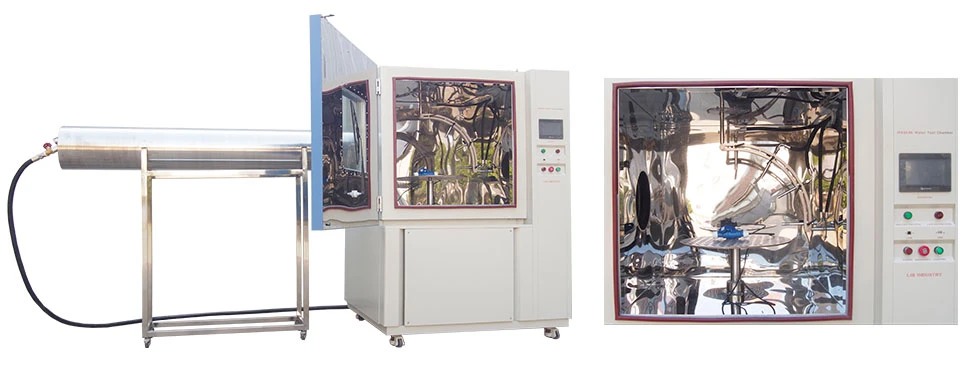
These features allow manufacturers to conduct thorough testing on sensitive components, ensuring product quality and consistency while minimizing the risk of water-related failures.
Why Lab-Based IPX6K9K Testing Matters
While field testing can provide insights, lab-based IPX6K9K testing offers numerous advantages:
- Controlled Conditions: Simulates extreme weather and cleaning conditions precisely.
- Repeatability: Ensures consistent results across multiple tests.
- Early Design Validation: Detects potential design flaws before mass production.
- Cost Efficiency: Reduces warranty claims and product recalls by validating reliability in advance.
Testing components like headlight modules under controlled conditions guarantees they perform reliably in real-world environments, minimizing failures and protecting brand reputation.
Conclusion
As automotive electronics become more sophisticated, verifying component durability under high-pressure water and heat is essential. IPX6K9K testing provides a reliable, repeatable method for validating product performance.
The LIB IPX6K9K Test Chamber combines advanced design, precise control, and robust construction, making it a trusted solution for automotive manufacturers.


