


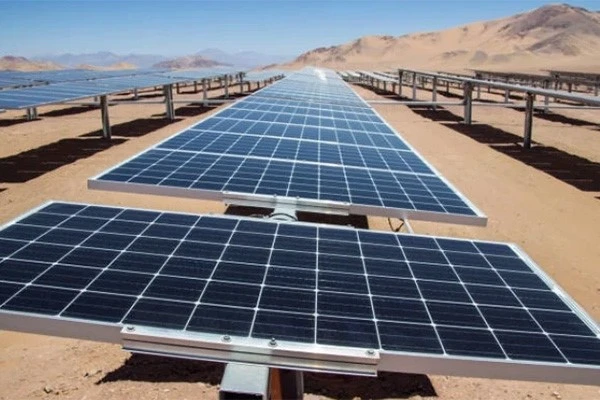
As the photovoltaic industry gains widespread application globally, solar modules need to operate for long periods in various complex climatic conditions, especially in high-temperature and high-humidity environments, which pose severe challenges to the sealing, material stability, and electrical performance of the modules. Long-term exposure to humid conditions can easily lead to issues such as EVA yellowing, backsheet delamination, and degradation of electrical performance, directly affecting system efficiency and lifespan.
To address these risks, industry standards have established a specialized Damp Heat test to verify the reliability of modules in harsh environments. This test is widely used in certification, research and development, quality control, etc., and has become a "must-pass course" for modules entering the global market.
Principles and Requirements of the Damp Heat Test
The damp heat test creates a high-temperature and high-humidity environment artificially to accelerate material aging and performance degradation, thereby evaluating the long-term stability of the modules under actual operating conditions. Taking the photovoltaic industry as an example, common test parameters are:
Test environment: 85℃ ±2℃ / 85% RH ±5%
Test duration: 1000 hours, some certifications require up to 2000-3000 hours
Main assessment items:
Power degradation Insulation resistance
EVA encapsulation color change or delamination
Backsheet or glass encapsulation layer aging, etc.
The main corresponding international standards include:
IEC 61215: Design, Evaluation and Certification of Monocrystalline Photovoltaic Modules
IEC 61646: Test Methods for Thin-Film Photovoltaic Modules
IEC 62688: Extended Requirements for Wet Heat Failure Modes of Photovoltaic Modules
UL 1703: One of the certification standards for the North American market
These standards not only ensure the service life of the modules, but also are important bases for export certification.
LIB Damp Heating Chamber for PV Modules: Specifically designed for PV module testing
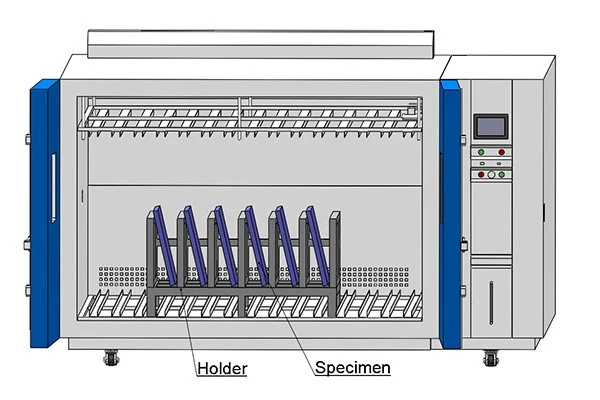
To meet the wet heat testing requirements of the photovoltaic industry, LIB damp heating chamber for pv modules offers a one-stop testing solution. It can simulate an extreme environment of 85℃/85%RH and supports simultaneous testing of 4 to 12 modules, ensuring long-term stability of temperature and humidity and consistency of the tests.
|
Model |
PV-04 |
|
Interior Volume |
1220L |
|
Temperature Range |
-20℃ ~ +150 ℃ -40℃ ~ +150 ℃ -60℃ ~ +150 ℃ -120℃ ~ +150 ℃ |
|
Temperature Fluctuation |
≤ ±0.5℃ |
|
Temperature Deviation |
≤ 2.0℃ |
|
Humidity Range |
20%RH ~ 98%RH |
|
Humidity deviation |
± 2.5% RH |
|
Temperature Change Rate |
1 ~ 3.4℃ / Min |
|
Panel Size |
1M*2M |
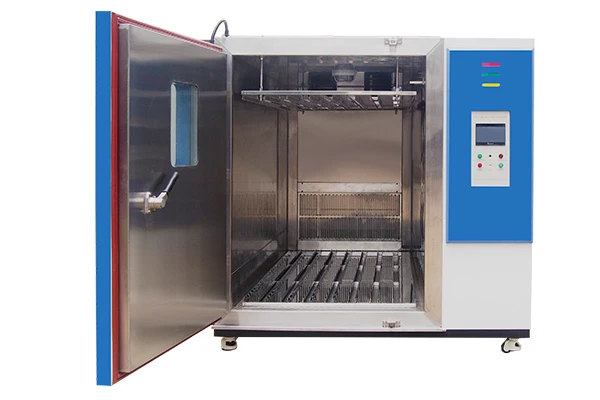
The product features are briefly as follows:
Stable control of dual 85 conditions, meeting 1000 to 3000 hours operation requirements
The sample holder can be adjusted in angle, suitable for different-sized modules
SUS304 inner workroom, corrosion-resistant and resistant to high humidity
Intelligent control system supports remote monitoring and data export
LIB also supports multiple customization options, including cable hole positions, water system, control interface, and composite test expansion, to help customers flexibly meet different testing requirements.
Conclusion
The damp heat test is not only an important part of the reliability assessment of photovoltaic components, but also a crucial step for products to obtain market access in international markets. With high-quality testing equipment, it can significantly improve the test efficiency and the repeatability of the results.
LIB focuses on environmental test equipment solutions and is committed to providing stable, accurate and efficient humidity and heat testing platforms for photovoltaic manufacturers, third-party laboratories, testing institutions, etc.
Welcome to contact LIB to obtain more technical materials or customized solution suggestions.


