


Can your product withstand a dramatic temperature leap from -40°C to +150°C within seconds?
Sudden temperature transitions are often the silent killers of product reliability-triggering cracks, delamination, warping, or complete functional failure. As a high-stress environmental testing tool, the thermal shock test chamber plays a critical role in validating product durability under harsh thermal variations. Whether it's microchips, automotive control units, or aerospace connectors, thermal shock testing is a vital step in R&D and quality assurance.
What is Thermal Shock Testing?
Thermal shock testing involves exposing test specimens to extreme high and low temperatures in rapid succession, simulating real-world scenarios where sudden temperature changes could impact product performance and structural integrity. The objective is to detect issues like cracking, solder joint failures, and material fatigue before the product hits the market.
Example:
An electronic circuit board transferred from a -40°C cold storage room to a +150°C operating environment can experience differential expansion and contraction among materials-potentially leading to solder cracks or component failure. With thermal shock testing, these vulnerabilities can be identified and addressed during the development phase.
How Does Thermal Shock Testing Work?
Thermal shock testing rapidly transfers specimens between two or three thermal zones, mimicking harsh environmental conditions. This test is ideal for simulating real-life situations-such as moving devices from a freezing outdoor environment into a heated indoor space, or simulating aircraft ascent through varying atmospheric layers.
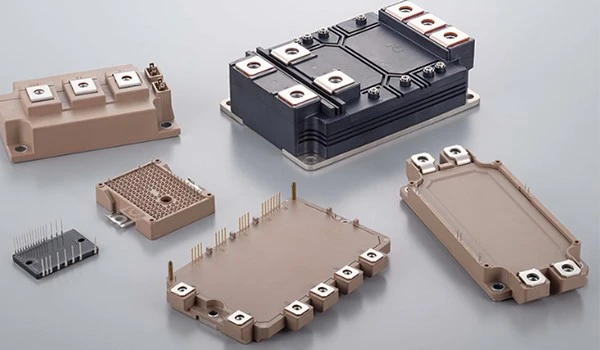
Real-World Application: Power Semiconductor Module
Test Object: IGBT module for electric vehicle inverters
Test Standard: IEC 60068-2-14, Method Na
Test Parameters:
High Temperature: +150°C, hold for 10 minutes
Low Temperature: -40°C, hold for 10 minutes
Transfer Time Between Zones: ≤10 seconds
Cycles: 300 complete hot/cold transitions
Total Test Duration: 100 hours
Post-Test Evaluation:
Visual: No cracking, swelling, or deformation
Electrical: Switching and insulation performance remained stable
Such test outcomes significantly reduce field failure rates and lower warranty costs.
Industries and Applications
Thermal shock testing is essential across numerous high-reliability sectors:
Electronics & Semiconductors: Chips, IGBTs, MOSFETs, PCBs, MCUs
Automotive: ECU units, sensors, inverters, control modules
Aerospace: Avionics, connectors, flight control systems
Energy Storage: Battery modules, BMS systems
Defense: Rugged computing systems, radar modules, military-grade hardware
International Standards for Thermal Shock Testing
To ensure consistency and repeatability, thermal shock testing is governed by globally recognized standards:
|
Standard |
Application |
Notes |
|
IEC 60068-2-14 |
Electronic components |
Common standard, Method Na specifies rapid temperature cycling |
|
MIL-STD-883, Method 1010 |
Military microelectronics |
Emphasizes extreme ranges and high cycle counts |
|
JEDEC JESD22-A104 |
Semiconductor packaging |
Specifies dwell times, temperature range, and transition speeds |
LIB thermal shock chambers support fully customizable profiles, compliant with all the above standards.
LIB Thermal Shock Test Chamber Solutions
LIB provides a wide range of thermal shock chambers, engineered to meet demanding testing conditions with high accuracy and performance. Available in two-zone and three-zone configurations:
Three-Zone Thermal Shock Chamber (High-Cycle, High-Speed)
Three independent zones (hot, cold, and test area) enable fast, automated temperature transitions.
Temperature Range: -70°C to +200°C
Transfer Time: ≤10 seconds
Recovery Time: ≤5 minutes
Pre-Heat Chamber:
Max Temp: +220°C
Heating Time: Ambient to +200°C in 30 mins
Pre-Cool Chamber:
Min Temp: -75°C
Cooling Time: Ambient to -70°C in 30 mins
Test Chamber Ranges:
High Temp Exposure: +20°C to +200°C
Low Temp Exposure: -65°C to -5°C
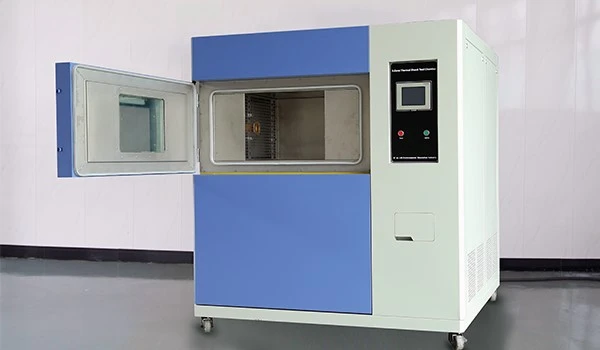
Two-Zone Thermal Shock Chamber (Compact, Versatile)
A mobile platform transfers the specimen between two temperature zones, ideal for medium or small test items.
Pre-Heat Chamber:
Max Temp: +220°C
Heating Time: Ambient to +200°C in 30 mins
Pre-Cool Chamber:
Min Temp: -75°C
Cooling Time: Ambient to -70°C in 30 mins
Test Chamber Exposure Ranges:
High: +20°C to +200°C
Low: -65°C to -5°C
Recovery Time: ≤5 minutes
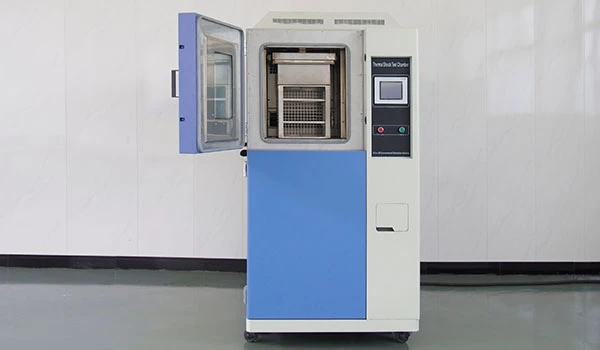
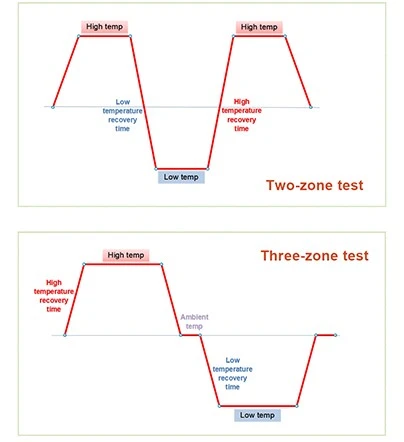
The two-zone type and three-zone type thermal shock chambers each have their own specific focuses. The temperature shock in the two-box type is more severe.
Why Choose LIB?
Standard Compliance: Fully compatible with IEC, MIL, and JEDEC testing requirements
Fast Response Systems: Minimized transfer times to meet high-frequency test cycles
Custom Engineering: Tailored chambers based on sample size, layout, or specific standard requirements
Global Support: On-site installation, remote assistance, training, and calibration
Peace of Mind: 3-Year Warranty + Lifetime Maintenance Service
Let's Talk With LIB
Thermal shock testing is not just a lab procedure-it's a proactive approach to quality assurance, helping manufacturers identify weaknesses and reduce the cost of failure before launch. With LIB's internationally certified thermal shock chambers, your testing process becomes smarter, faster, and more reliable.
Contact LIB today info@libclimatetest.com for technical consultation or a custom quote tailored to your application needs!


