



I'm in the business of supplying Xenon Weathering Test Chambers, and one question I get asked a lot is, "What is the size of a typical Xenon Weathering Test Chamber?" Well, let's dive into this topic and break it down.
Understanding Xenon Weathering Test Chambers
Before we talk about size, let's quickly go over what a Xenon Weathering Test Chamber does. These chambers are used to simulate the effects of long - term outdoor exposure on materials. They use a xenon arc lamp to mimic the full - spectrum sunlight, along with controlling factors like temperature, humidity, and rainfall. This helps manufacturers test the durability and colorfastness of their products, such as plastics, paints, textiles, and automotive parts, in a much shorter time frame.
If you're interested in learning more about these testers, you can check out our Xenon Accelerated Weathering Tester. It's a great resource for getting detailed information on the technology behind these chambers.
Typical Sizes
There isn't a one - size - fits - all answer when it comes to the size of a Xenon Weathering Test Chamber. The size varies based on a few factors, including the type of products being tested and the testing requirements of the user.
Small - Sized Chambers
Small - sized Xenon Weathering Test Chambers are usually designed for laboratories or small - scale production facilities. These chambers typically have an internal volume ranging from about 100 to 300 liters. They're great for testing small samples, like small plastic components or fabric swatches.
The compact size makes them easy to fit into limited laboratory spaces. They're also more energy - efficient compared to larger models, which can be a plus for those looking to keep operating costs down. If you're just starting out with weathering tests or have limited testing needs, a small - sized chamber might be the way to go.
Medium - Sized Chambers
Medium - sized chambers are a popular choice for many medium - sized manufacturing companies. Their internal volume generally falls between 300 and 800 liters. These chambers can accommodate larger samples or multiple smaller samples at once.
For example, you could test several automotive interior parts or larger pieces of painted metal in a medium - sized chamber. They offer a good balance between capacity and space requirements. If your production volume is moderate and you need to test a variety of product sizes, a medium - sized Xenon Arc Test Chamber could be the right fit.
Large - Sized Chambers
Large - sized Xenon Weathering Test Chambers have an internal volume of over 800 liters. These are typically used by large manufacturing plants or research institutions that need to test full - sized products or large batches of samples.

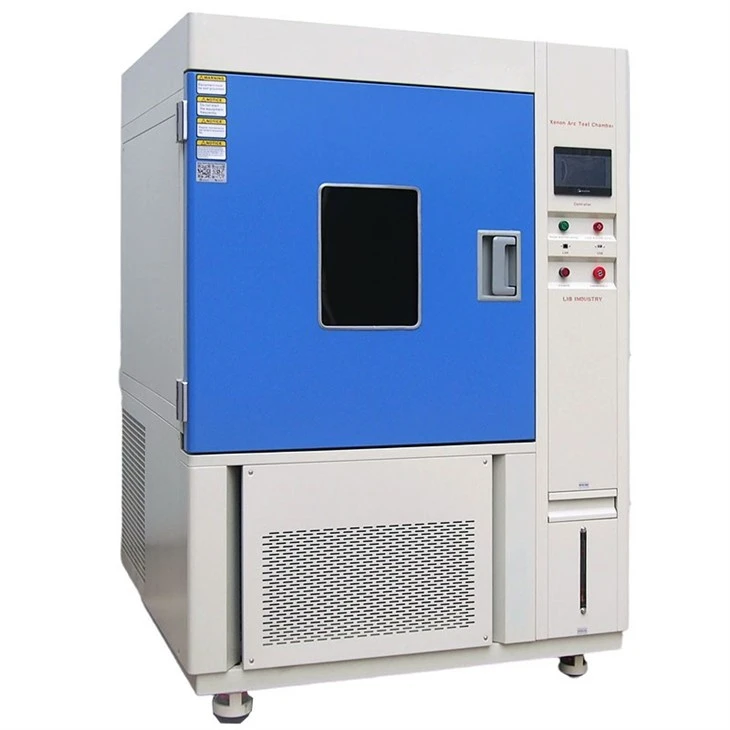
For instance, an automotive manufacturer might use a large - sized chamber to test a full car bumper or a set of exterior panels. The large capacity allows for more comprehensive and realistic testing, as it can simulate the real - world exposure conditions for a complete product. However, these chambers do require more space and energy to operate.
Factors Influencing Size Selection
When deciding on the size of a Xenon Weathering Test Chamber, there are a few key factors to consider.
Sample Size and Quantity
The most obvious factor is the size and number of samples you need to test. If you're testing small, individual samples, a small chamber might be sufficient. But if you have large products or need to test multiple samples simultaneously to speed up the testing process, a larger chamber will be necessary.
Testing Space Availability
The physical space in your facility is also crucial. You need to make sure you have enough room to install the chamber, as well as space for easy access for maintenance and sample loading and unloading. Measure the available area carefully before making a decision.
Budget
Budget plays a role in size selection too. Generally, larger chambers are more expensive to purchase and operate. They require more powerful xenon lamps, larger climate - control systems, and more energy. So, you'll need to balance your testing needs with your financial resources.
Other Considerations
Apart from size, there are other features you might want to look for in a Xenon Weathering Test Chamber. For example, some chambers come with advanced control systems that allow you to precisely adjust the testing parameters like light intensity, temperature, and humidity.
There are also chambers that offer different types of filters for the xenon lamp, which can simulate different geographical locations and weather conditions. And if you're interested in UV - related testing, our UV Accelerated Aging Weathering Test Machine might be something you want to explore.
Contact for Purchase and Consultation
If you're in the market for a Xenon Weathering Test Chamber, I'd love to help you find the right size and model for your needs. Whether you have questions about the technical specifications or want a detailed quote, don't hesitate to reach out. We're here to make sure you get the best testing solution for your business.
References
- ASTM G155 - Standard Practice for Operating Xenon Arc Light Apparatus for Exposure of Non - metallic Materials
- ISO 4892 - 2 - Plastics -- Methods of exposure to laboratory light sources -- Part 2: Xenon - arc lamps


