


In the service life of rubber products, sunlight, temperature, and oxygen are well-known enemies. However, there is a more insidious and highly destructive "invisible killer" – ozone (O₃). Even at extremely low concentrations of just a few pphm (parts per hundred million), ozone can cause the surface of stressed rubber to crack in a very short time, ultimately leading to product failure and safety hazards.
To simulate and accelerate this aging process, a series of international test standards have been established. Understanding the differences between these standards is key to applying the correct test method. The following table provides a clear comparison of the four most common standards:
1. Core Rubber Ozone Test Standards at a Glance
|
Standard |
Test State |
Primary Application & Focus |
Key Feature |
|
ASTM D1149 |
Static Strain |
Evaluating ozone resistance of rubber materials under static tensile strain. One of the most common standards for material comparison and QC. |
The benchmark test for comparing different rubber compounds under stretched conditions. |
|
ASTM D1171 |
Unstrained (Free State) |
Evaluating surface ozone cracking in outdoor or chamber environments without applied strain. |
Simulates aging during storage or on non-stressed surfaces of products like tire sidewalls. |
|
ISO 1431-1 |
Static & Dynamic Strain |
Evaluating ozone resistance under both static and dynamic (moving) conditions. |
Dynamic testing simulates real-world working conditions, crucial for parts like mounts and seals. |
|
ISO 7326 |
Static Strain |
Specifically designed for assessing ozone resistance of rubber and plastic hoses under static conditions. |
Evaluates hoses in a statically bent position, relevant for fuel, AC, and hydraulic lines. |
As the table illustrates, selecting the right standard is crucial. It depends on whether your product is under constant strain, dynamic movement, or no strain at all during its service life.
2. How to Choose a Chamber that Masters All These Standards?
Faced with such stringent and varied test requirements, an excellent ozone aging chamber must possess extremely high precision, stability, and flexibility. The Rubber Ozone Aging Test Chamber from LIB is expertly designed to meet these very challenges.
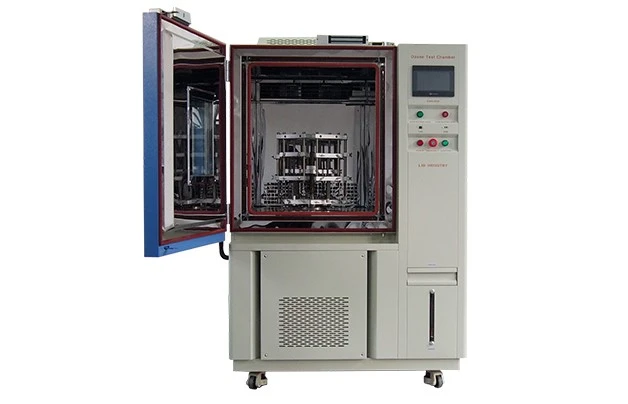
Core Advantages of the LIB Rubber Ozone Aging Test Chamber:
1. Precise Ozone Control for All Standards
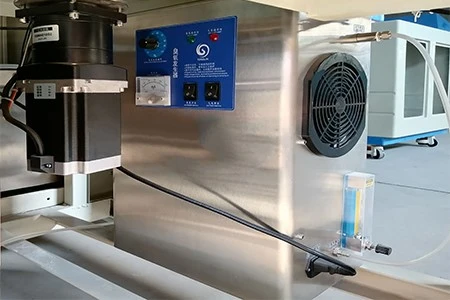
LIB chambers utilize ozone generators to create and maintain a stable ozone environment with 1~1000PPHM range.
This fully covers the various stringent conditions required by all the mentioned standards. The intelligent PID control system ensures minimal concentration fluctuation, guaranteeing excellent repeatability and comparability of test results.
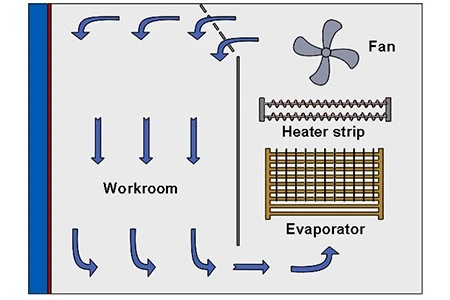
2. Exceptional Temperature Uniformity
A precision air circulation system ensures superior temperature uniformity within the workspace (often reaching ±1.0°C or better).
Constant temperature is key to accelerating the aging reaction and ensuring consistent test conditions.
3. Flexible Compatibility with Various Test Fixtures
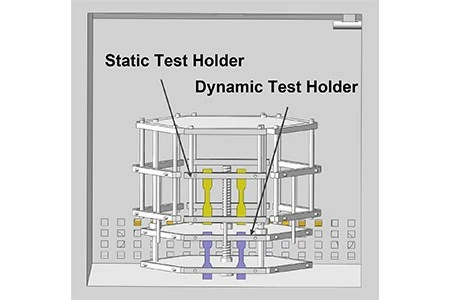
Understanding the differences between standards, the rubber ozone aging test chamber features a spacious internal design that can flexibly accommodate various specimen racks.
Whether it's static tensile fixtures for ASTM D1149, specialized racks for unstrained samples per ASTM D1171, reciprocating devices for dynamic testing per ISO 1431-1, or bending fixtures for hoses required by ISO 7326, the chamber is perfectly compatible-truly a multi-purpose machine.
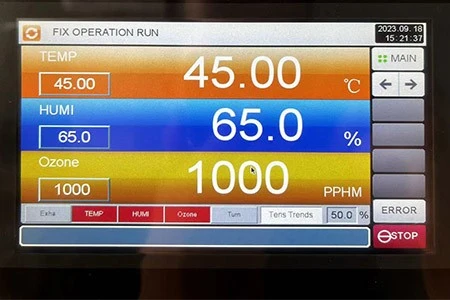
4. User-Friendly Design & Robust Quality
Intuitive Touch Screen Control: Allows users to easily set parameters and monitor operation in real-time.
High-Quality Stainless Steel Interior: Corrosion-resistant, easy to clean, ensures durability, and prevents contamination.
Multiple Safety Protections: Equipped with ozone leakage alarms and over-temperature protection for operator and environmental safety.
Conclusion: The Foundation for Your Product Quality
Whether developing new anti-ozone rubber compounds or conducting rigorous quality assurance checks, adherence to international standards is your passport to the market. The LIB Rubber Ozone Aging Test Chamber is not just a piece of test equipment; it is a "guardian" of your product quality and an "accelerator" for your R&D progress.
Choosing LIB is choosing a commitment to precision, reliability, and professionalism.
Learn more technical details and equip your lab with a powerful weapon against the ozone challenge!


